
Ice Baths in Winter: Proven Anti-Freeze Performance in -10°C Testing

In high-latitude or cold regions, the real challenge for an outdoor ice bath chiller is not whether it can cool effectively, but whether it can operate safely and reliably under extreme temperatures.
When ambient temperatures drop to around freezing—or even below—water circulation systems, heat exchangers, and other critical components are at risk of damage caused by ice formation. This is why, for ice baths in winter, especially in outdoor installations or continuous commercial use, anti-freeze capability becomes more critical than cooling performance itself.
To address this key challenge, our next-generation ice bath chiller has been systematically upgraded for winter operation. In the following sections, we will take a closer look at how this system performs through real-world extreme low-temperature testing.
Extreme Cold Testing: Anti-Freeze Performance in Winter
During recent engineering tests, we conducted an assessment of the freeze-protection performance of our new ice-bath chiller. This experiment simulated low-temperature ice baths in winter outdoors by placing the complete unit inside a cold storage facility maintained at -10°C for continuous running testing.
At the outset of the experiment, we filled the bathtub with 320 L of water. The chiller was pre-configured to operate in heating mode, maintaining constant operating conditions and lasting for 8 hours.
Following 8 hours of full-load operation in this extreme cold environment, the test results were outstanding: the chiller’s core operating programs functioned normally, with only minimal frost accumulation observed on the fins and no widespread ice formation. Furthermore, the defrosting speed demonstrated a marked improvement compared to the previous generation of the product.
Real-World Test Results: How the Chiller Performs with Ice Baths in Winter
These favorable experimental results are, on one hand, attributable to the optimization of the fin airflow path carried out by COLDCHILLER’s engineers.
The primary function of the fins is to expand the heat exchange surface area, thereby facilitating heat exchange between the air and the refrigerant.
Following the upgrade to the airflow path, air distribution has become more uniform, and the overall heat exchange cycle efficiency has significantly improved. Consequently, heating output is more robust at equivalent power levels, and defrosting efficiency has also been structurally enhanced.
On the other hand, the new generation of ice-bath chillers is equipped with multiple high-precision temperature sensors—including probes located on both the internal and external coils—enabling the system to rapidly detect critical frosting conditions and promptly trigger the defrosting sequence.
Why Anti-Freeze Protection Is Critical for Ice Baths in Winter
In the regions where some of our customers are located, winter temperatures drop below 5℃—and may even fall below freezing.
Since water freezes at 0℃ and expands by approximately 9% when frozen, this expansion poses a catastrophic threat to ice bath equipment: copper pipes in the water lines or heat exchangers may burst due to the expansion. The pump housing is prone to being jammed by ice or structurally deformed, and even the compressor may be affected and shut down.
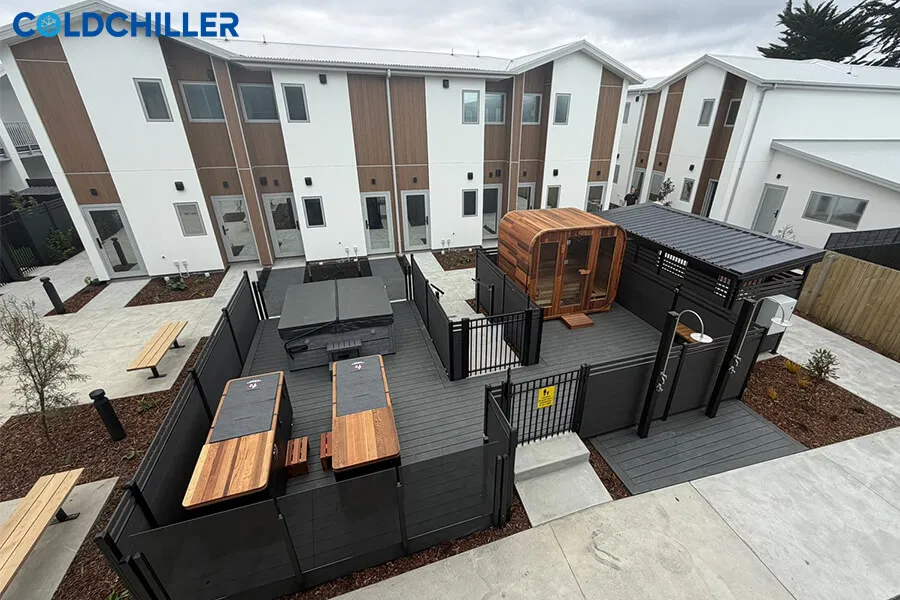
Automatic Defrost System for Ice Baths in Winter
A reliable automatic defrosting system is essential to ensure stable operation, especially for ice baths in winter. It is worth emphasizing that an intelligent automatic defrost system is not only valuable in low-temperature winter scenarios; beyond supporting ice baths in winter, it also plays an equally vital role in regulating operating conditions and protecting the equipment in high-usage scenarios.
Automatic Ice Prevention in Cooling Mode
In routine usage scenarios—such as daily wellness and sports recovery—the device frequently operates in a standard cooling mode for extended periods. To address the potential risk of frost buildup at low temperatures under these conditions, the new ice bath chillers employ a more stable “passive defrosting” mode.
If the chiller has been operating in cooling mode for more than 20 minutes, and the internal coil temperature consistently drops below the safety threshold for over 3 minutes, the system detects an imminent risk of frost buildup and automatically initiates the defrosting cycle.
This defrost sequence begins by stopping the compressor while simultaneously keeping the water pump and fan running. This design utilizes the residual heat inherent in the circulating water, combined with forced air convection to melt the frost on the fin. The advantage of this approach lies in lower energy consumption and a smoother defrosting process.
Defrost Function in Heating Mode for Winter Operation
In heating mode, the device employs a reverse-cycle defrosting strategy. The system triggers the defrosting function when the condenser coil temperature probe detects that the temperature has dropped to a critical threshold—and provided that all other operational prerequisites, such as the accumulated heating runtime, have also been met.
The compressor and fan first cease operation, after which the system switches to cooling mode. The outdoor coil and fins—previously in a frosted state—transform from a “heat-absorbing” into a “heat-releasing,” causing the layer of frost to melt rapidly and drain away. Compared to passive defrosting methods, this approach offers faster response times and more thorough results, thereby significantly enhancing the device’s operational stability in low-temperature environments.
Anti-Freeze Protection for Ice Baths in Winter
In low-temperature environments, cold plunge chillers face the risk of structural damage caused by freezing—an especially critical concern for ice baths in winter outdoors. To address this critical issue, the new-generation chiller incorporates a staged-response anti-freeze system.
The core mechanism of this system is based on changes in ambient temperature and inlet water temperature, ranging from low-energy maintenance to active protection, and finally to strong intervention. Even when the unit is in standby mode, the system continuously monitors both the surrounding ambient temperature and the inlet water temperature.
Once either sensor detects a critical threshold, the unit automatically switches into its anti-freeze operational mode. This fully automated process eliminates the need for manual intervention and effectively prevents component damage during idle or unattended periods.
Level 1 Anti-freeze: Periodic Water Circulation
When the ambient temperature drops to 4℃—a level approaching the freezing point—the internal temperature of the water system has not yet decreased significantly.
At this stage, the system activates its Level 1 anti-freeze protection. The water pump operates intermittently to maintain water flow, thereby preventing localized freezing caused by stagnant water. This serves as a low-energy preventive measure.
Level 2 Anti-freeze: Continuous Pump Operation
As the ambient temperature continues its descent to 2℃and the inlet water temperature declines noticeably—reaching around 5°C as detected by the temperature sensor—the system enters Level 2 anti-freeze mode. At this stage, the water pump operates continuously without interruption, using constant water movement to prevent sudden localized freezing.
Level 3 Anti-freeze: Active Heating Protection
When the inlet water temperature drops further to 3℃ or even lower, relying solely on water circulation is no longer sufficient to prevent freezing. The equipment then activates Level 3 anti-freeze mode by automatically enabling its heating function to safeguard critical components—such as the water pump and piping—from potential damage.
Anti-Freeze Protection That Works Even in Fault Conditions
Moreover, this anti-freeze system incorporates a sensor redundancy logic, ensuring that freeze protection remains effective even in the event of system faults.
First, if either sensor fails, the system will rely on the remaining functional sensor to determine and activate the appropriate anti-freeze mode. If both sensors fail, the system will automatically default to Level 2 anti-freeze mode, preventing protection failure due to the absence of sensor signals.
Secondly, even if the unit enters a lockout state due to faults (such as high-pressure protection, low-pressure protection, or voltage abnormalities), it is still permitted to engage corresponding anti-freeze protection as long as the required conditions are met.
In this situation, since the compressor cannot be activated under lockout, Level 3 anti-freeze (start heating mode) cannot be executed. However, the system can still provide protection through electric heating, preventing freezing damage for ice baths in winter.
Conclusion
As demonstrated by recent on-site testing conducted in a cold storage facility, the new chiller was able to maintain stable operation even under sustained low-temperature conditions ranging from -5℃ to -10℃—an essential capability for ice baths in winter.
More importantly, this performance is underpinned by a comprehensive and systematic design approach, integrating a three-level anti-freeze protection mechanism, multi-sensor coordinated control, and an automatic defrost system.
From proactive prevention to active intervention, and ultimately to safety assurance under extreme conditions, each layer of this strategy is engineered to support long-term operational stability.
For commercial projects that require outdoor deployment, operation in cold climates, or minimized maintenance risk, a cold plunge chiller equipped with such robust winter protection capabilities for ice baths in winter offers a clear competitive advantage. It not only enhances operational safety and reliability but also enables more controllable operating costs.
FAQs
Question 1:Do ice bath chillers automatically prevent freezing when not in use during winter?
Answer:Yes, it will. The unit’s anti-freeze function activates automatically while in standby mode, requiring no manual intervention. When the ambient temperature drops to a specific threshold, the system automatically engages the appropriate anti-freeze protection level to safeguard the water circulation system.
Question 2:Should I drain my tub when not using ice baths in winter for long periods?
Answer:If you reside in a region where winter temperatures are low enough to cause water to freeze, and you intend to leave the ice bath unused and powered off for an extended period, we strongly recommend draining the tub. Doing so not only prevents potential damage to the equipment but also facilitates the process of refilling the unit when you resume use in the coming year.
Get A Quote

Contact Me
Related Post You May Also Like

Cold Plunge Tub Buying Guide: Commercial vs Home Use
[pac_divi_table_of_contents exclude_headings_by_class="include" included_headings="off|on|on|off|off|off" active_link_highlight="on" level_markers_3="icons" title_container_padding="10px|15px|10px|15px|true|false" title_container_bg_color="#333333"...
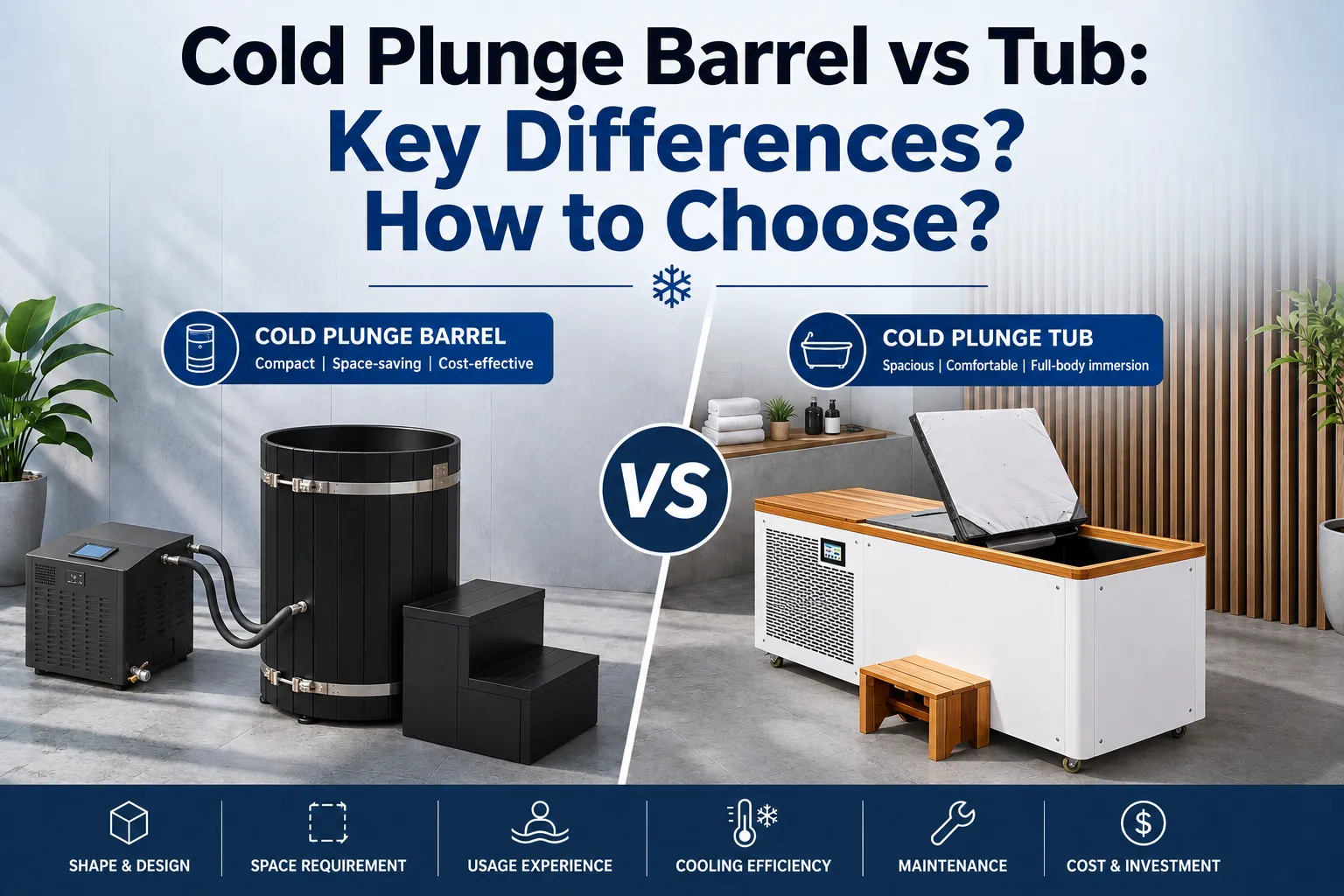
Cold Plunge Barrel vs Tub: Key Differences?How to Choose?
[pac_divi_table_of_contents exclude_headings_by_class="include" included_headings="off|on|on|off|off|off" active_link_highlight="on" level_markers_3="icons" title_container_padding="10px|15px|10px|15px|true|false" title_container_bg_color="#333333"...
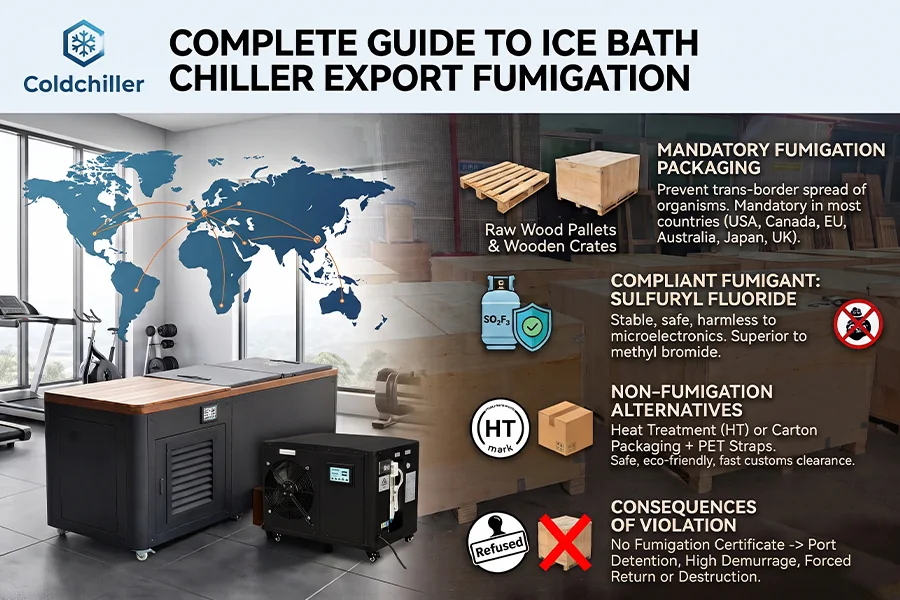
Cold Plunge Chiller Transport:Fumigation Guidelines
[pac_divi_table_of_contents exclude_headings_by_class="include" included_headings="off|on|on|off|off|off" active_link_highlight="on" level_markers_3="icons" title_container_padding="10px|15px|10px|15px|true|false" title_container_bg_color="#333333"...
The Sauna & Ice Bath Opportunity You Can’t Ignore
[pac_divi_table_of_contents exclude_headings_by_class="include" included_headings="off|on|on|off|off|off" active_link_highlight="on" level_markers_3="icons" title_container_padding="10px|15px|10px|15px|true|false" title_container_bg_color="#333333"...
0 Comments