
Cold Plunge Chiller Pump Issues and Improvement Strategies
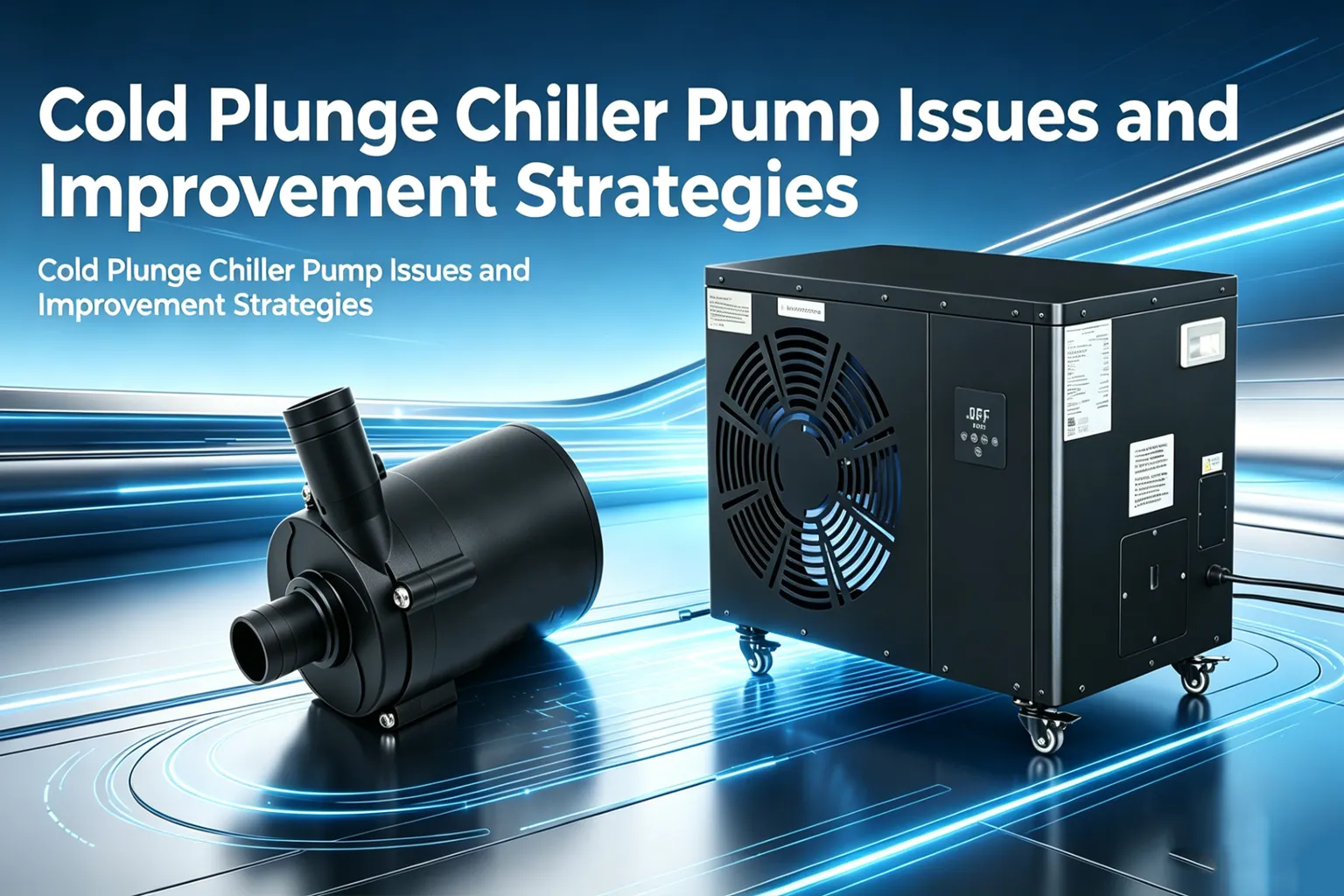
In a chiller unit, the cold plunge chiller pump, as the core component of the cold plunge chiller, bears the primary responsibility for heat exchange and circulation of the water in the chilled water bath. It is a key component ensuring constant temperature cooling of the chilled water bath and stable operation of the equipment. Based on market feedback and actual usage, the cold plunge chiller pump consistently has the highest failure rate among all components of a chiller unit. Its failure not only directly leads to the chilled water bath failing to cool, causing chiller unit shutdown and affecting the experience of hot and cold water exchange, but also easily triggers problems such as motor burnout and reduced heat exchange efficiency. The following will discuss the main reasons for the high failure rate of the cold plunge chiller pump, and the manufacturer, Coldchiller, will share targeted technical measures and quality control strategies to reduce its failure rate.
What Is a Chiller Water Pump?
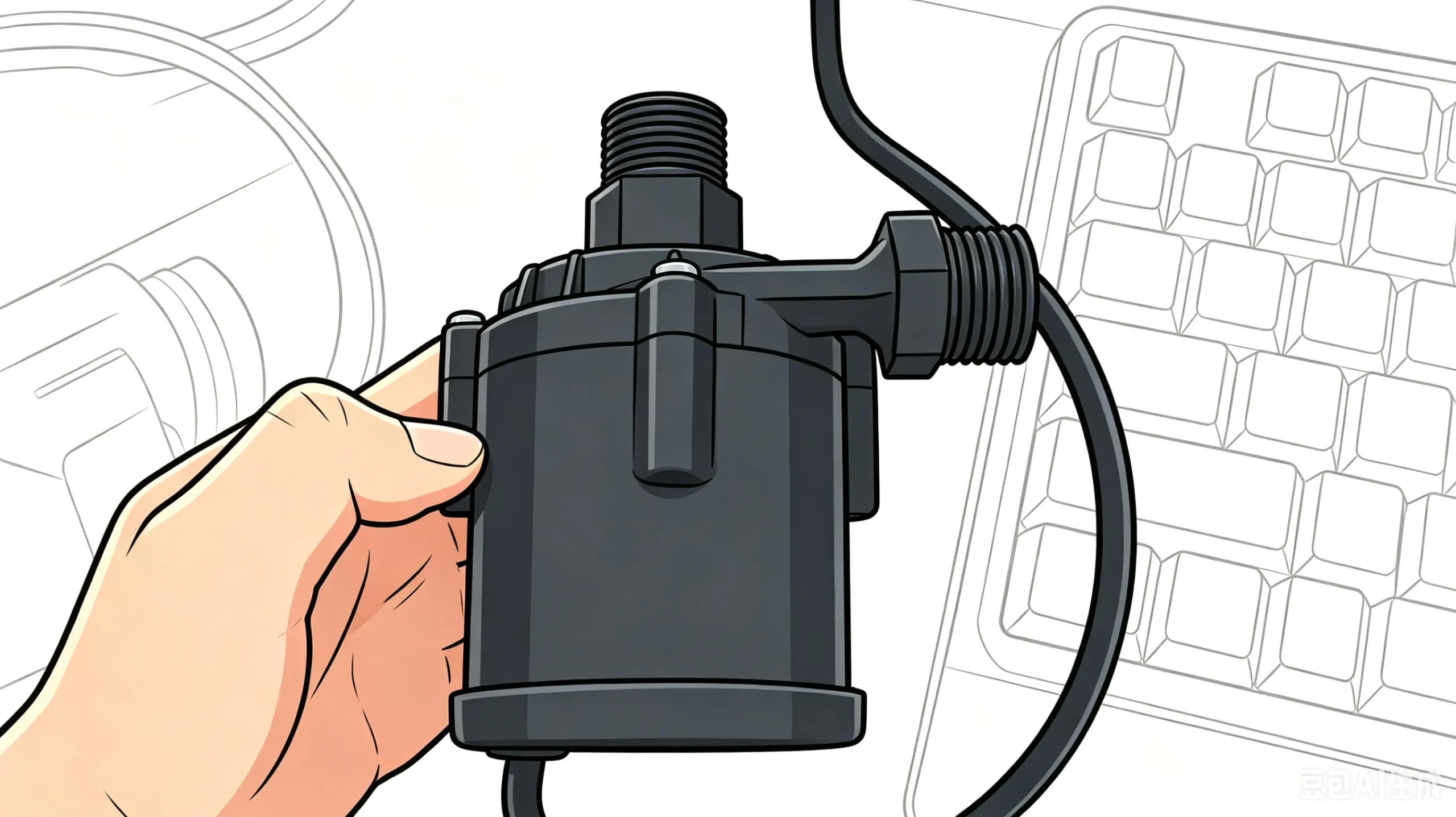
The chiller water pump is an indispensable core component in the entire water system circulation, and also the core power source for the ice bath water circulation. In the entire hot and cold alternating therapy system, it undertakes the core functions of water transportation and heat exchange circulation. Relying on the centrifugal force generated by the high-speed rotation of its internal impeller, it continuously draws room-temperature water from the cold bath pool, stably transporting the pool water to the chiller evaporator for heat exchange and cooling. The cooled water is then pushed back into the cold soak pool, creating a continuous, closed-loop circulation of water between the pool, connecting pipes, and evaporator.
Through continuous water circulation and heat exchange, the water pump can stably remove heat from the pool water, ensuring the chiller’s rapid cooling and precise temperature control, maintaining a constant water temperature in the cold soak pool, and meeting the user’s therapeutic needs for a cold water bath after sauna. Meanwhile, its operational stability directly affects the overall cooling efficiency, energy consumption, and service life of the machine. If the water pump is not powerful enough or the circulation is not smooth, it will directly lead to slow cooling of the pool water, decreased temperature control accuracy, and even abnormal load of the chiller and soaring energy consumption. It is the core component that forms the basis for the safe, stable, and efficient cold water bath cooling function of the whole machine.
Why Do Water Umps in Chillers Have The Highest Failure Rate?
Among all the components of the Cold Plunge Chiller, the water pump is a consumable part with a fixed lifespan, significantly shorter than core durable components like the compressor and heat exchanger. This is the inherent reason for its relatively high failure rate. Furthermore, the unique environment of a sauna cold soak pool, with its constantly circulating water, inevitably introduces human hair, dander, dust, sediment, and impurities such as calcium and magnesium ions. These impurities continuously enter the pump with the water flow, causing wear and tear on the impeller, mechanical seals, and other precision structures over time. They can also lead to minor blockages within the pump, increasing the operating load, accelerating the aging and wear of internal parts, and further shortening the pump’s lifespan. In addition, since most refrigeration units require continuous, uninterrupted operation, the water pump is constantly working without sufficient downtime for rest and recovery. Under these high-frequency, high-load conditions, it is naturally more prone to failure. However, the failure rate of water pumps is not uncontrollable. As long as they are used correctly in strict accordance with the equipment specifications, and water impurities are cleaned regularly and the filtration system is checked and maintained to reduce the damage of impurities to the pump body, the wear rate can be effectively reduced, and the failure rate of water pumps can be greatly reduced, preventing frequent damage and malfunctions.
1.What Impact Does Using a Refrigeration Unit At Sub-Zero Temperatures Have On The Water Pump?
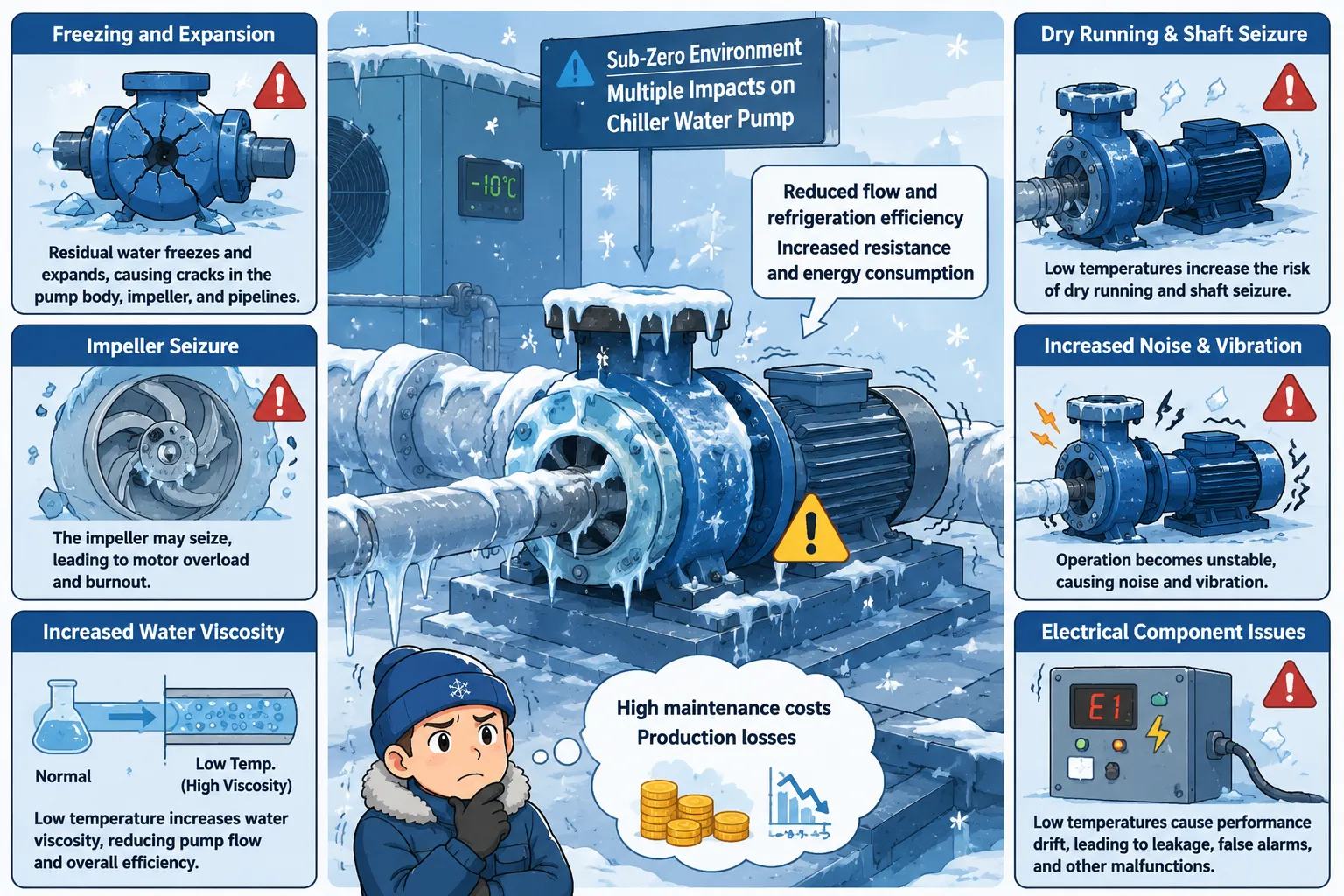
When used in sub-zero environments, chiller water pumps are highly susceptible to multiple adverse effects: Residual water in the pump body and pipelines is prone to freezing and expansion at low temperatures, potentially cracking the pump casing, impeller, and pipelines, and even causing the impeller to seize, leading to motor overload and burnout. Simultaneously, low temperatures significantly increase water viscosity, resulting in reduced pump flow, increased pipeline resistance, insufficient refrigeration cycle, and decreased operating efficiency. Furthermore, problems such as dry running and shaft seizure, increased noise and vibration may occur. The motor windings and electrical control components may also experience performance drift due to low temperatures, leading to malfunctions such as leakage and false alarms. This not only shortens the overall lifespan of the water pump but can also cause the chiller unit to shut down, resulting in high maintenance costs and production losses.
2.What Happens If The Refrigeration Unit Is Started And Stopped Frequently?
During daily use, sauna and cold shower refrigeration units are prone to frequent start-stop and repeated on/off cycles if the water temperature fluctuates significantly or the temperature control logic is flawed. This operating mode can cause significant damage to the built-in circulating water pump. Each time the pump starts, the motor current surges dramatically, creating a sudden load change. Internal components such as the impeller, bearings, and mechanical seals are subjected to water flow impact and instantaneous torque. The repeated impacts from frequent start-stop cycles continuously accelerate impeller wear and cause seals to age and loosen. Over time, this can easily lead to motor overload, seal leaks, abnormal operating noises, and other malfunctions, significantly shortening the pump’s lifespan.
3.Do Chiller Water Pumps Need To Be Replaced Regularly?
There’s no fixed, rigid time standard for cleaning the water pump of a chiller; it mainly depends on the water quality in your cold bath. If the cold bath usually has a lot of impurities, hair, and cloudy water with a lot of dust, dander, and floating debris, these impurities are more likely to enter the water pump. In this case, you need to clean it more frequently and shorten the cleaning interval. If you change the water frequently, the water is clean and clear, and there are few impurities, you can appropriately extend the cleaning cycle and avoid frequent disassembly and maintenance.
Many customers worry about whether the water pump needs to be replaced on time. Here’s a clear explanation: Under normal and proper use and routine maintenance, the water pump does not need to be replaced periodically. As long as we clean the filtration system regularly, reduce impurities entering the pump body, and prevent the pump from being clogged by sediment and hair, or worn down, the water pump can work stably for a long time. It doesn’t need to be replaced after the fixed two-year lifespan. Replacement is only necessary when there is severe aging or irreparable damage.
4.What Happens If The Water Pump Of a Chiller Is Not Maintained Regularly?
Neglecting routine maintenance and improper operation are major reasons for the high failure rate of chiller water pumps. Many users only know to turn on the machine and use it, but never take the initiative to perform maintenance. They ignore minor problems, which over time develop into serious malfunctions, eventually causing the equipment to shut down and fail to cool properly. Common improper practices include not changing or cleaning the circulating water for a long time, allowing impurities in the water to accumulate and form scale, clogging the pipes and the inside of the water pump. Not cleaning the water pump filter screen for a long time allows debris to block the water inlet, resulting in insufficient water intake and reduced flow. This causes cavitation wear on the impeller and pump body. In addition, frequent and arbitrary start-ups and shutdowns of the equipment, and failure to follow standard operating procedures, can cause instantaneous current surges and mechanical vibrations, which can accelerate the aging, loosening, and damage of internal parts of the water pump.
How Coldchiller Manufacturers Reduce The Failure Rate Of Chiller Water Pumps?
To address the causes of high failure rates in chiller water pumps, major domestic and international manufacturers have adopted a series of targeted measures from multiple dimensions, including design optimization, material upgrades, process improvements, intelligent management and control, and operation and maintenance services. These measures aim to reduce failure rates at the source and improve the reliability and service life of water pumps. These measures work together to form a comprehensive system, effectively solving the problem of water pump vulnerability under frequent load fluctuations and driving the development of chiller water pumps towards higher efficiency, stability, and longer lifespan.
1.How Do Coldchiller Manufacturers Ensure Their Water Pumps Function Properly In Sub-Zero Temperatures?

As a professional manufacturer of Coldchiller, we have comprehensively upgraded our systems across four key dimensions: hardware structure, intelligent control, defrosting logic, and multi-level antifreeze, ensuring stable and safe operation of our refrigerators in sub-zero environments. First, we optimized the airflow path of the heat exchanger fins for more even air distribution and higher heat exchange efficiency. Combined with multiple high-precision internal and external coil temperature sensors, we accurately detect frost formation trends and employ passive defrosting in cooling mode and rapid defrosting via reverse circulation in heating mode to prevent frost buildup from affecting operation. Simultaneously, we feature a three-level antifreeze protection system that continuously monitors the ambient and inlet water temperatures even in standby mode: intermittent water circulation is initiated at 4°C, continuous pump operation at 2°C, and automatic heating protection is activated at 3°C and below. These layers of protection prevent pipe and pump ruptures and blockages caused by water freezing and expansion. In addition, the system is equipped with sensor redundancy logic and a fault fallback mechanism. If a single sensor fails, the anti-freeze mode can be switched normally. Even when the whole machine is locked and shut down, basic anti-freeze protection can still be retained. Combined with the selection of core components and structural reinforcement for low temperature adaptation, the whole machine can stably withstand extreme low temperatures of -5℃ to -10℃ without manual supervision. It is not only perfectly suited for long-term outdoor and commercial use in high-latitude cold regions, but also provides stable cooling below zero and all-weather anti-freeze safety.
2.Optimize The Design Of Refrigeration Unit Products
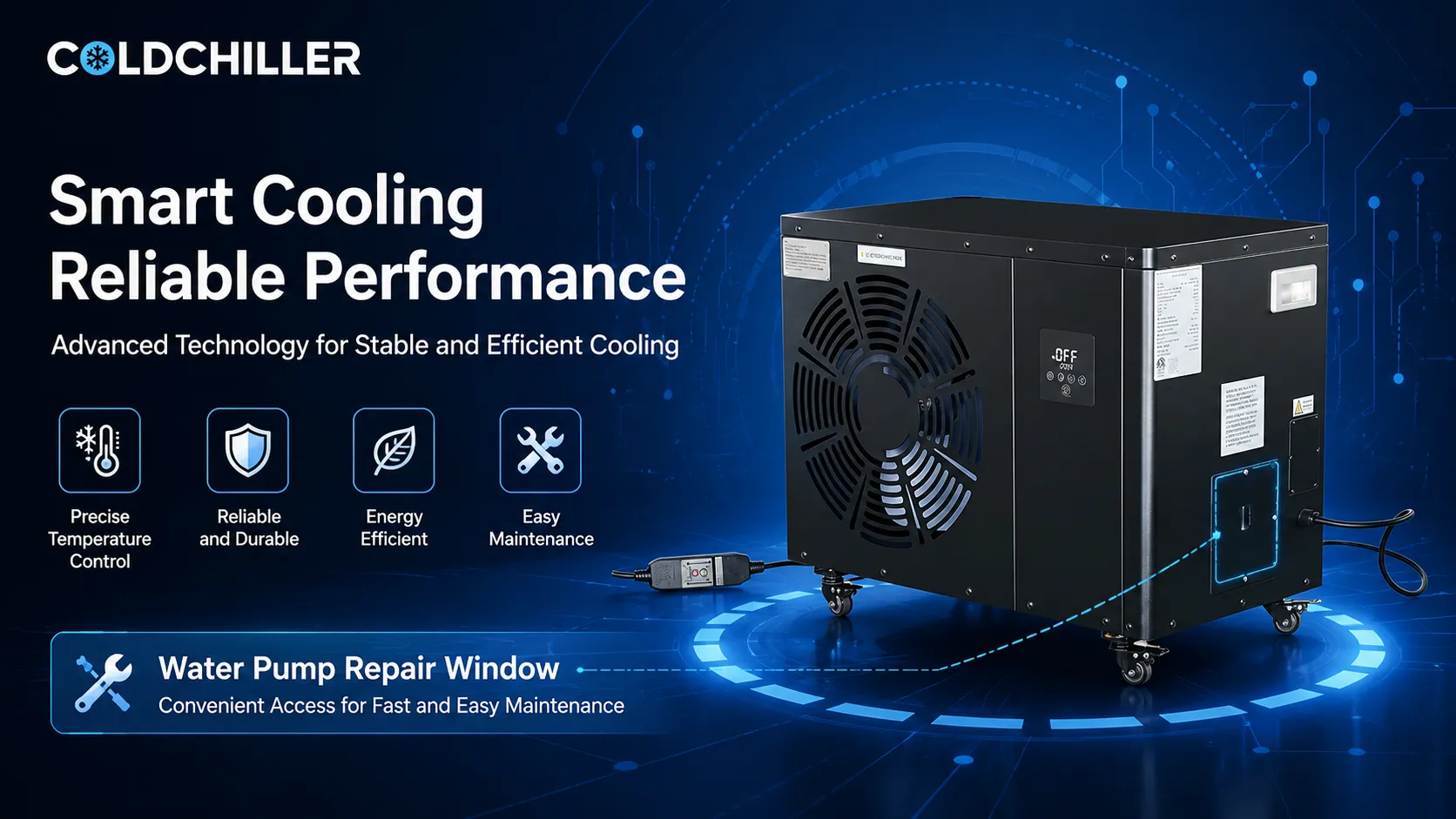
The new generation of the best cold plunge water chiller features a high-definition dual-display LED screen that simultaneously displays the actual and set water temperatures, and supports one-button switching between Celsius and Fahrenheit. The panel icons clearly distinguish between cooling, constant temperature, heating, and defrosting modes. The button operation is simple and intuitive, allowing even beginners to easily operate and achieve precise temperature control. Furthermore, it features one-button disinfection, real-time status feedback, and is waterproof and dustproof, suitable for humid environments such as ice baths, offering simple and safe operation.
Secondly, regarding maintenance convenience, a dedicated water pump inspection panel has been added. This completely changes the previously complex process of replacing the water pump, which required disassembling the entire top cover and multiple outer casings. Now, only this single panel needs to be removed to directly inspect or replace the water pump, significantly reducing maintenance time and minimizing the impact of equipment downtime on business operations, making maintenance more efficient and convenient. Simultaneously, in terms of heat dissipation and structural layout, the chassis adopts an optimized airflow and heat dissipation structure design, ensuring effective heat dissipation from the large-diameter fan and large-area heat sink, while also creating a more integrated overall appearance, avoiding exposed and messy pipes and protruding components. With its clean and sleek lines, the machine is suitable for various high-end commercial settings. The inlet/outlet, filter, and drain ports are neatly arranged, making pipe connections clearer, facilitating water changes, wastewater discharge, and cleaning, and reducing the risk of leaks. Furthermore, in terms of practical details, the integrated top handle and bottom casters ensure easy handling and movement, allowing for easy placement and transport by a single person. The built-in independent junction box and concealed sensor layout not only enhance circuit protection but also contribute to a cleaner and more aesthetically pleasing appearance. Combined with a thickened, rust-resistant, and corrosion-resistant chassis shell, it is resistant to peeling or deformation during long-term commercial use, making it more durable and showcasing a more professional feel.
3.Countermeasures For Frequent Start-Stop Of Refrigeration Units
Addressing this common industry shortcoming, Coldchiller’s new chiller, ideal for both commercial use and portable ice bath applications, features a specially optimized and upgraded electrical control system. Through an upgraded intelligent control program, a dedicated start up delay protection function has been added. The system intelligently manages the start up and shutdown logic based on water temperature changes, effectively preventing repeated start ups and shutdowns within a short period. This provides ample buffer time for the water pump and motor, smoothly mitigating the impact of the initial operating load and reducing wear and tear on the water pump from instantaneous current and mechanical vibration. This design not only effectively protects the core circulating water pump but also safeguards other components such as the compressor and piping, reducing the probability of overall system failure and improving the long term stability and durability of the equipment for ice bath and professional cold plunge setups.
Can Coldchiller’s Ice Bath Refrigeration Machines Be Controlled By Mobile Phone?
Compared to traditional chillers, our chillers equipped with dedicated smart WiFi deliver a comprehensively upgraded user experience: Traditional models only support close range physical panel operation, limited by machine placement and requiring manual control, resulting in cumbersome operation, long waiting times, and troublesome maintenance. Our WiFi smart version, however, comes with a dedicated chiller app, relying on a stable LAN/WAN dual network connection to completely break through spatial limitations. Perfect for at home ice bath, users can achieve full function remote control without being physically near the machine. Whether at home, in the office, or traveling, users can remotely pre cool, time, manage, and precisely control the temperature via their mobile phones or even Apple Watches. This easily solves the pain points of traditional equipment, such as inconvenient operation, long waiting times, and low maintenance efficiency, allowing users to enjoy an efficient, comfortable, and intelligent chiller experience.
Conclusion
The water pump is a core component of the chiller’s water circulation system, enduring long-term low-temperature freezing damage, start-up and shutdown shocks, and continuous high-load operation, making it a high-failure-rate consumable part in the industry. To address this, Coldchiller has taken a fundamental approach, upgrading its systems through intelligent low-temperature antifreeze, structural optimization, water pump protection, convenient maintenance, intelligent control panels, and remote WiFi management. This strengthens core materials and operational logic, reducing water pump wear across the entire chain from hardware protection and intelligent control to post-maintenance, solving the pain points of traditional models such as easy freezing and cracking, rapid wear, and difficult maintenance.
Furthermore, proper user operation and regular maintenance can effectively extend the equipment’s lifespan. By partnering with us, you don’t need to worry about the industry-wide problem of high after-sales service due to consumable core components. Leveraging mature technology and end-to-end quality control, we provide stable, durable, and easy-to-maintain commercial-grade refrigeration equipment. We also offer comprehensive maintenance guidance, combined with our equipment’s built-in intelligent protection system, ensuring stable operation around the clock and lower maintenance costs. From initial technological innovation to on-the-ground operational support, we are a reliable partner for your long-term cryotherapy projects.
FAQs
Question 1: How Often Should The Water Pump Be Cleaned, And Is Regular Replacement Necessary?
Answer:The cleaning cycle depends on the water quality of the cold bath. Poor water quality requires more frequent cleaning, while clean water allows for longer cleaning intervals. Under normal use and proper maintenance, regular replacement of the water pump is not mandatory.
Question 2: Can The Chiller Be Used Directly Outdoors? What precautions should be taken?
Answer: Coldchiller chillers are suitable for outdoor use. The entire unit uses a thickened, rust-proof and corrosion-resistant shell, providing basic waterproof and dustproof capabilities. However, prolonged exposure to rain and direct sunlight is not recommended. It is advised to use it with a sunshade or rain cover to prevent rainwater erosion and sun-induced aging.
Question 3: Will Frequent Start-Stop Operations Damage The Water Pump? How Does The New Model Address This?
Answer:Frequent start-stop operations will impact the water pump motor and accelerate impeller wear. Our new model features an optimized electrical control program with a start-up delay protection feature to prevent repeated start-stop operations, effectively buffering the operating load and protecting the water pump.
Question 4: Will Scale Buildup On The Water Pump Impeller Affect Its Use?
Answer:Calcium and magnesium ions in water do indeed cause scale buildup, but the high-speed circulation of the water pump continuously washes the impeller, and most of the scale will be flushed away with the water flow. Regular water filtration can prevent scale buildup.
Question 5: What Are The Advantages Of Partnering With Coldchiller For Chiller Procurement And Water Pump After-Sales Maintenance?
Answer: Our equipment features a dedicated water pump inspection panel, making inspection and replacement convenient and efficient. The entire unit reduces water pump failure rates from the structural and intelligent system perspectives. We also provide lifetime after-sales service, including full technical guidance and troubleshooting support, significantly reducing commercial downtime risks and subsequent maintenance costs.
Get A Quote

Contact Me
Related Post You May Also Like

Cold Plunge Tub Buying Guide: Commercial vs Home Use
[pac_divi_table_of_contents exclude_headings_by_class="include" included_headings="off|on|on|off|off|off" active_link_highlight="on" level_markers_3="icons" title_container_padding="10px|15px|10px|15px|true|false" title_container_bg_color="#333333"...

Cold Plunge Barrel vs Tub: Key Differences?How to Choose?
[pac_divi_table_of_contents exclude_headings_by_class="include" included_headings="off|on|on|off|off|off" active_link_highlight="on" level_markers_3="icons" title_container_padding="10px|15px|10px|15px|true|false" title_container_bg_color="#333333"...

Cold Plunge Chiller Transport:Fumigation Guidelines
[pac_divi_table_of_contents exclude_headings_by_class="include" included_headings="off|on|on|off|off|off" active_link_highlight="on" level_markers_3="icons" title_container_padding="10px|15px|10px|15px|true|false" title_container_bg_color="#333333"...

The Sauna & Ice Bath Opportunity You Can’t Ignore
[pac_divi_table_of_contents exclude_headings_by_class="include" included_headings="off|on|on|off|off|off" active_link_highlight="on" level_markers_3="icons" title_container_padding="10px|15px|10px|15px|true|false" title_container_bg_color="#333333"...
0 Comments