
Cold Plunge Chiller Transport:Fumigation Guidelines
As a leading global manufacturer in the ice bath industry ecosystem, Coldchiller not only provides users worldwide with highly precise temperature control, stable performance, and commercially suitable cold plunge chillers, but also possesses extensive experience in international logistics and customs policy compliance.
In frequent communication with customers, we’ve found that a common question is: Do cold plunge chillers require fumigation for export? To address this question, Coldchiller has compiled this guide to share fumigation requirements and key information for exporting cold immersion chillers, ensuring the safe and undamaged delivery of your purchased products.
Under What Circumstances Is Fumigation Required For The Export Of Ice Bath Chiller Units?
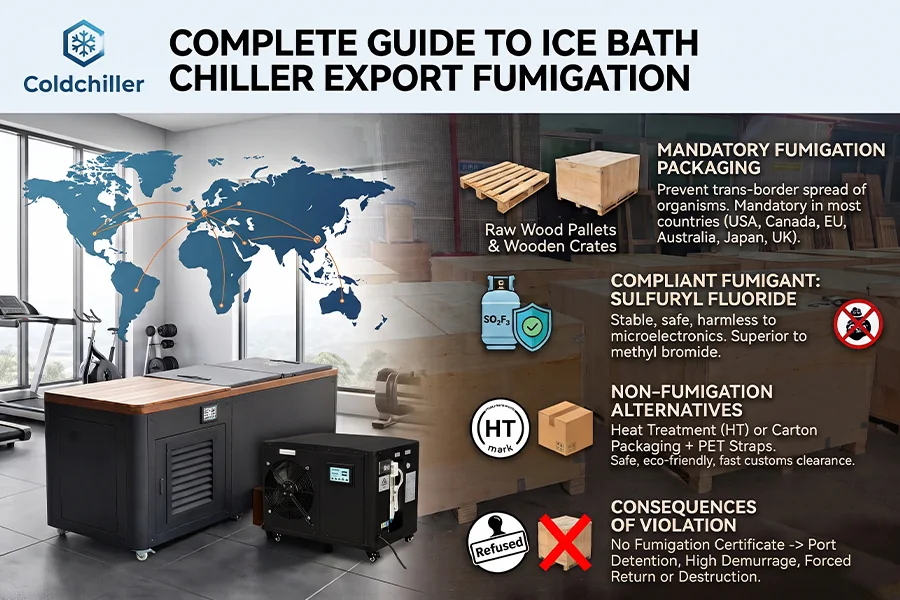
According to international customs policy, ice bath chiller units are classified as electronic and electrical products, and the products themselves do not require any fumigation treatment. Fumigation is only mandatory when the packaging contains unprocessed wood during the transport of the chiller unit to prevent the cross-border spread of harmful organisms such as longhorn beetles and termites. The following are common packaging methods for ice bath chiller units that require fumigation during export:
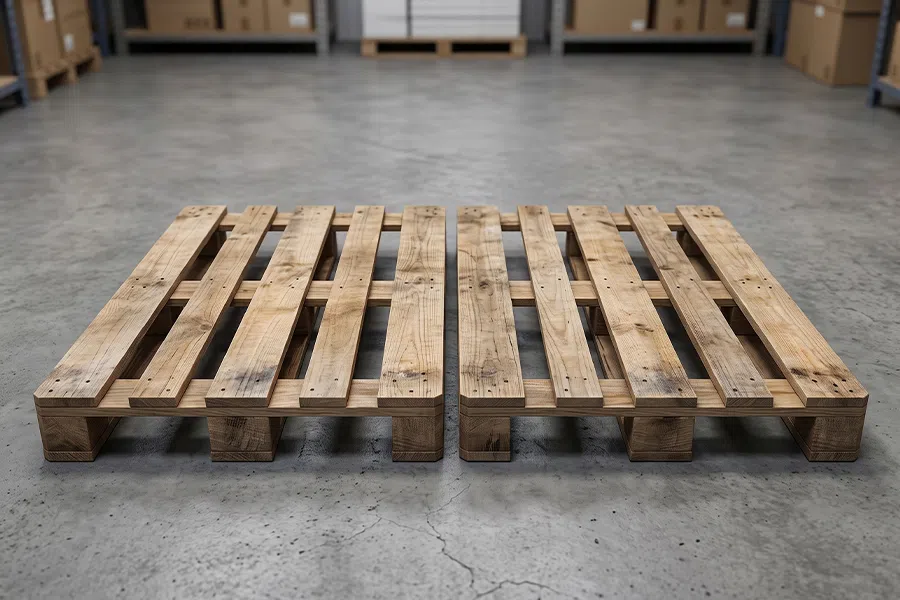
Solid Wood Pallet Packaging
Firstly, when packing the ice bath chiller unit, solid wood pallets are used as load-bearing supports. Solid wood pallets are natural wood packaging materials, and although they are only used for support, fumigation is mandatory in most countries (such as the United States, Canada, the European Union, the United Kingdom, Australia, and Japan) to comply with international standards.
Wooden Crate Packaging
Secondly, to save packing space for multiple ice bath chiller units or when ice bath tubs are packed together with chiller units, wooden crates are usually used for outer packaging. This minimizes the risk of collisions during transportation and saves more packing space and costs. However, like sauna packaging, these wooden crates are subject to mandatory fumigation and must undergo fumigation or heat treatment before export.
.webp)
Will Fumigation Services Affect Cold-Plunge Chiller Units?
Yes, if an inappropriate fumigant is used, it can damage internal components of the chiller unit. Fumigation typically involves placing the product or packaging crate in a sealed space and then injecting gas through pipes to kill insects. This process usually uses methyl bromide or sulfuryl fluoride agents and must be carried out for 24 hours.
Why Is The Use of Methyl Bromide Fumigant Not Recommended?
Firstly, methyl bromide has been a traditional fumigant for wood packaging in international trade for over a decade and is one of the most common fumigants. It not only has fast insecticidal efficiency and strong penetrating power but is also suitable for a wide range of applications (export wood packaging, agricultural products, and log quarantine).
However, due to its strong penetrating power, during long-distance transportation, its residual gas can easily decompose in humid environments, producing acidic substances. This can severely corrode the microelectronic components and PCB boards of the refrigeration unit’s control system. Therefore, the use of methyl bromide is not recommended for fumigation services.
Special Fumigation Agent for Cold Plunge Chiller Transportation: Thionyl Fluoride
For fumigation of chiller units packaged in wooden pallets or crates, we highly recommend using thioyl fluoride. Thionyl fluoride is a colorless and odorless gas. Although it also has strong penetrability, it is chemically more stable and less likely to react chemically with the materials of the cold plunge chiller unit.
Therefore, for fumigation services of cold plunge chiller units, we strongly recommend using thioyl fluoride. Under proper fumigation conditions, it is superior to thioyl fluoride and carries a lower risk of impacting the transportation of cold plunge chiller units.
How to Avoid Fumigation During the Transport of Cold Plunge Chiller Units
If buyers wish to simplify customs clearance procedures for cold plunge chiller units, eliminate the risk of customs detention, and shorten the transportation cycle, the most effective method is to avoid using natural wood packaging at the source. Customers can choose different packaging methods and whether to perform fumigation based on their own circumstances.
Carton Packaging
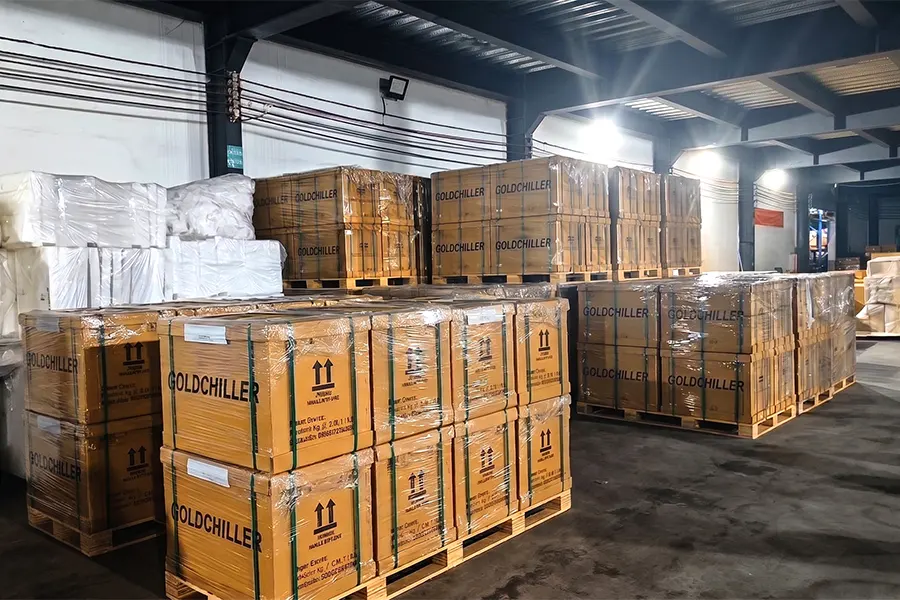
Carton packaging is one of the most common methods on the market. For example, Coldchiller cold plunge chiller unit manufacturers typically use thick corrugated cardboard boxes to package the chiller units, with thick cardboard boxes protecting the corners of the chiller unit. These are then secured with PET plastic steel straps and finally wrapped with stretch film to prevent moisture and dust from entering. Even in harsh transportation environments, this greatly reduces the risk of the equipment becoming damp and contaminated.
Heat Treatment
Besides fumigation, heat treatment is also a globally recognized, safe, and most environmentally friendly alternative. If your purchased cold plunge chilelr unit is packaged with a solid wood base or wooden crate, but you do not want the chiller unit to come into contact with any chemical gases, then heat treatment is the best alternative.
It involves physically treating the wood, heating its core temperature to at least 56°C and maintaining this temperature for more than 30 minutes. No chemicals are used in this process. The resulting heat-treated wooden packaging typically bears the “HT” IPPC mark, which complies with global customs regulations and is identical to fumigation.
What Are The Consequences of Non-Compliant Wooden Packaging?
Customs inspections are stringent for cross-border shipments, especially for wooden products. If wooden pallets, solid wood, or other wooden packaging used in the transport of cold plunge chiller units does not meet international phytosanitary requirements, it will not only significantly impact the customer’s delivery time but may also lead to the following serious consequences:
Cargo Detention
When wooden packaging is detained due to a lack of fumigation certificates or unclear IPPC markings, customs clearance will be suspended pending further inspection by relevant authorities, resulting in demurrage fees that can reach hundreds of dollars.
Of course, some countries allow remedial measures, such as re-fumigating and phytosanitary treatment of the wooden packaging or replacing the wooden crates and pallets. However, the resulting costs, such as fumigation service fees, labor handling fees, and storage fees, will need to be paid separately.
Forced Return or Destruction
Of course, in most countries, such as the United States and Australia, if quarantine authorities find wooden packaging that has not been fumigated or heat-treated and is deemed to pose a high biological risk, customs will directly refuse entry and require the goods to be returned or destroyed on-site. In certain circumstances, if the packaging cannot be safely separated from the goods, the goods may also be affected. (This depends on the regulations of the importing country and the on-site quarantine decision.)
How does Coldchiller Ensure The Safe Export of Its Ice Bath Chiller Units?
As a leading global supplier of ice bath chiller units, we are committed not only to the research and development and sales of high-precision, commercial-grade immersion chiller units, but also to leveraging our years of experience in cross-border logistics and multinational cooperation to provide customers with safe and reliable equipment on time.
Ice Bath Tub and Cold Plunge Chiller Unit
Most buyers at Coldchiller purchase the ice bath tub and chiller unit together, and we typically package them together. First, we usually pack the immersion chiller unit separately in corrugated cardboard boxes. For non-integrated ice bath tubs, we place the packaged chiller unit inside the tub, then use plywood crates and pallets for outer packaging, and finally, we perform overall fumigation.
For integrated ice bath tubs, the immersion chiller unit is usually located inside the tub. The overall design includes not only the soaking area but also the placement of the cold plunge chiller unit, providing an aesthetically pleasing and practical ice bath system.
For Standalone Export Solutions for Cold Plunge Chiller units:
If a customer’s customized cold plunge chiller unit is packaged individually or shipped in bulk, we will use wooden crates or corrugated cardboard boxes for packaging. If plywood is used for packaging, we usually require a third-party fumigation service to perform overall fumigation with sulfuryl fluoride to avoid damage to the chiller unit.
FAQs
Question 1: Are Cold Plunge Tubs Safer Than Ice Baths, And What Should I Watch Out For?
Answer:Yes, for most people, cold water baths are safer. This is because the temperature of a cold water bath is higher than that of an ice bath, providing a gentler stimulus to the body, but it’s less effective for post-exercise recovery.
When taking a cold water bath, the following points should be noted:
1. It is not recommended to suddenly enter the cold water; allow yourself to acclimatize first, then slowly submerge your shoulders.
2. If you experience shivering, chest tightness, dizziness, or difficulty breathing, leave the bath immediately.
3. It is not recommended to soak on an empty stomach or after drinking alcohol, as this will increase the burden on your body.
Question 2: Do Ice Bath Filters Really Improve Water Quality and Temperature?
Answer: Not high. Coldchiller offers various product designs, including basic, upgraded, and high-end models. Investors can choose based on their operating scenarios, number of equipment, and store size, making capital relatively controllable. Once operations reach a certain scale, expansion to a more suitable development direction can be considered.
Question 3: How Long Should I Stay In An Ice Bath And How Cold Should The Water Be for Beginners?
Answer: For beginners, it is not recommended to immediately adjust the water temperature to extremely low levels (below 15℃) or soak for extended periods. It is suggested to start with soaking for 3-5 minutes, and after a period of prolonged soaking (1-2 weeks), the body will adapt to water around 15℃. Subsequently, the soaking temperature can be gradually lowered using the same method, until the body can tolerate a temperature of 5℃ or even lower. Of course, even with experience, soaking at excessively low temperatures should not exceed 10 minutes.
Get A Quote

Contact Me
Related Post You May Also Like

Cold Plunge Tub Buying Guide: Commercial vs Home Use
[pac_divi_table_of_contents exclude_headings_by_class="include" included_headings="off|on|on|off|off|off" active_link_highlight="on" level_markers_3="icons" title_container_padding="10px|15px|10px|15px|true|false" title_container_bg_color="#333333"...
Cold Plunge Barrel vs Tub: Key Differences?How to Choose?
[pac_divi_table_of_contents exclude_headings_by_class="include" included_headings="off|on|on|off|off|off" active_link_highlight="on" level_markers_3="icons" title_container_padding="10px|15px|10px|15px|true|false" title_container_bg_color="#333333"...

The Sauna & Ice Bath Opportunity You Can’t Ignore
[pac_divi_table_of_contents exclude_headings_by_class="include" included_headings="off|on|on|off|off|off" active_link_highlight="on" level_markers_3="icons" title_container_padding="10px|15px|10px|15px|true|false" title_container_bg_color="#333333"...
Ice Bath Chiller Condenser Fin: Copper vs Aluminum Comparison
[pac_divi_table_of_contents exclude_headings_by_class="include" included_headings="off|on|on|off|off|off" active_link_highlight="on" level_markers_3="icons" title_container_padding="10px|15px|10px|15px|true|false" title_container_bg_color="#333333"...
0 Comments