
Minimum Outdoor Operating Temperature for a Cold Plunge Bathtub Chiller

At what temperature below zero can a cold plunge bathtub chiller operate normally outdoors? Some ice bath users in colder areas often worry about asking such questions. As a cold plunge manufacturer, we understand the challenges of maintaining high-performance chiller operation in cold climates. In this article, we will provide a comprehensive analysis of outdoor chiller usage and share key tips for winter maintenance.
What Is the Minimum Operating Temperature of a Cold Plunge Bathtub Chiller?
When purchasing a chiller, customers in low-temperature regions frequently ask: What is the minimum operating temperature of a chiller?
Typically, standard chillers are designed to function in ambient temperatures no lower than 5°C (41°F).
Unlike standard models, COLDCHILLER cold plunge chillers are engineered specifically for low-temperature environments and can operate in outdoor conditions as cold as -5°C (23°F).
The reason why our cold plunge bathtub chiller can be used in low-temperature outdoor environments is that we have added insulation materials to the manufacturing of the cold plunge bathtub chiller, especially the pipeline part of the chiller.
We have added insulation cotton to the water inlet and outlet pipes of the chiller, the internal cold plunge pump pipes and other water circulation places, which fully guarantees normal use in low-temperature environments.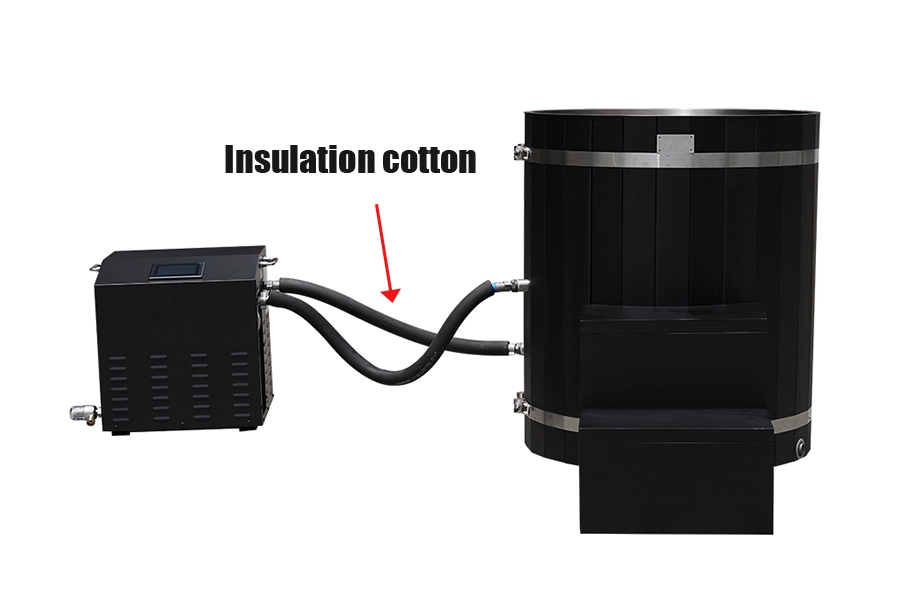
The Impact of Cold Weather on the Chiller for Bathtub Cold Plunge
Cold weather will have a certain impact on the equipment. If you want to run the chiller at too low a temperature, there may be the following potential problems.
Equipment Failure
Pipe freezing: Water freezes in the inlet and outlet pipes, which may cause the pipes to rupture.
Ice on the outer wall of the copper pipe: Low temperature causes condensed water to freeze and wrap around the pipes.
Cold plunge chiller pump jamming: Low temperature can cause the water in the pump to freeze, causing the pump to jam, and in severe cases, it may cause damage to the bearings and blades in the pump.
Reduced Equipment Performance
In extremely cold environments, critical refrigeration components such as condensers and evaporators are less efficient due to slower heat exchange. This can significantly affect the overall cooling performance of the cold plunge bathtub chiller.
Increased Maintenance Difficulty
Due to severe cold weather and the complexity of equipment maintenance, maintenance becomes more difficult, which will increase a lot of maintenance time and cost. Therefore, appropriate protective measures need to be taken in cold weather.
Key Features That Help Cold Plunge Chillers Survive Cold Climates
When using a water chiller for cold plunge in a harsh cold environment, if no protective measures are taken, pipes may rupture and cooling efficiency may decrease. In order to ensure that your cold plunge bathtub chiller runs more smoothly outdoors, COLDCHILLER provides you with practical outdoor protection measures for chillers.
Enhance Insulation Measures
When using a chiller outdoors in low temperatures, we strongly recommend covering the unit with an insulated cover to shield it from extreme cold. Additionally, insulation materials—such as insulation cotton or rubber-plastic foam—should be wrapped around the chiller’s inlet and outlet pipes to prevent freezing and maintain optimal water flow.
Install a Windshield or Protective Shelter
Setting up a simple wind barrier or protective shed around your outdoor chiller can effectively block cold wind from directly hitting the unit. This helps maintain internal temperatures and prevents operational issues caused by extreme exposure to freezing air.
Run the Defrost Function
The defrost function is an important device to ensure the normal use of the chiller in low-temperature outdoor environments. Running the defrost function in a low-temperature environment can prevent ice from forming inside the chiller, affecting the cooling efficiency and causing equipment failure.
The chillers provided by COLDCHILLER are equipped with a defrost function, allowing users to operate the chiller normally in low-temperature environments.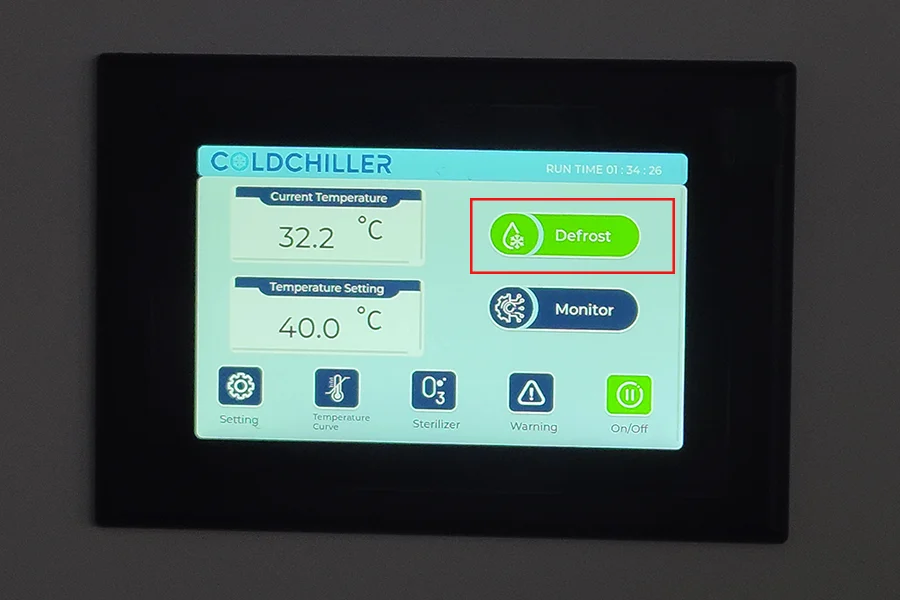
How Does the Defrost Function Keep the Cold Plunge Bathtub Chiller Running Efficiently and Stably?
In order to make the cold plunge chiller for bathtub work normally in low-temperature outdoor environments, we set a function for the cold plunge bathtub chiller, that is, the defrost function. The defrost function is an important device to ensure the normal use of the chiller in low-temperature outdoor environments.
Why Is the Defrost Function Important?
In cold environments, frost can accumulate on the surface of the condenser, a core component of the cold plunge bathtub chiller. The condenser’s primary role is to convert high-temperature, high-pressure gas into a high-pressure liquid—a key process in the chiller’s refrigeration cycle.
Without defrosting, frost buildup can block heat exchange, reducing cooling efficiency and potentially damaging the system over time.
How Does the Defrost Function Work?
The cold plunge water chiller will defrost during the heating operation. When the chiller is heated, it absorbs heat from the air. When the device absorbs heat from the air, the temperature of the condenser area will decrease, which is easy to cause frost on the surface.
During defrosting, the system will briefly reverse and increase the temperature of the condenser by starting the cooling mode. Specifically, the cooling mode absorbs the coldness in the air and heats up one side of the condenser, thereby effectively melting the surface frost layer.
The defrost time is generally set to 3 minutes (the defrost time can be set) to increase the temperature of the condenser and melt the frost.
Signs During Defrosting
During the defrost process, you may notice:
- Noise: Minor sounds such as clicks or hisses are normal and part of the cycle.
- White Smoke: This is water vapor released from the vents, not actual smoke.
- Condensation: Some condensate water may form. If the ground is uneven, water may flow out from the corners of the unit—this is also normal.
Why Choose a Chiller with a Defrost Function?
The defrost function in COLDCHILLER cold plunge chiller units ensures long-term stable and efficient operation, especially in environments where temperatures regularly drop below 0°C (32°F). It helps prevent frost-related performance degradation and protects critical components from damage.
If you live in a cold region, investing in a chiller with a built-in defrost function is not just a smart choice—it’s a necessary one for year-round use.
Can Ice Bath Tubs Be Used in Winter?
As a cold soak manufacturer with many years of production experience, we can tell you for sure that ice bath tubs can be used in winter.
Using cold plunge bath tubs in winter has natural advantages. The temperature is low in winter, and it is easier to maintain the temperature of the ice bath without frequent refrigeration.
At the same time, the refrigeration efficiency can be greatly improved, and it is easier to reach the set temperature. In winter, it can also save energy consumption and reduce the burden on equipment.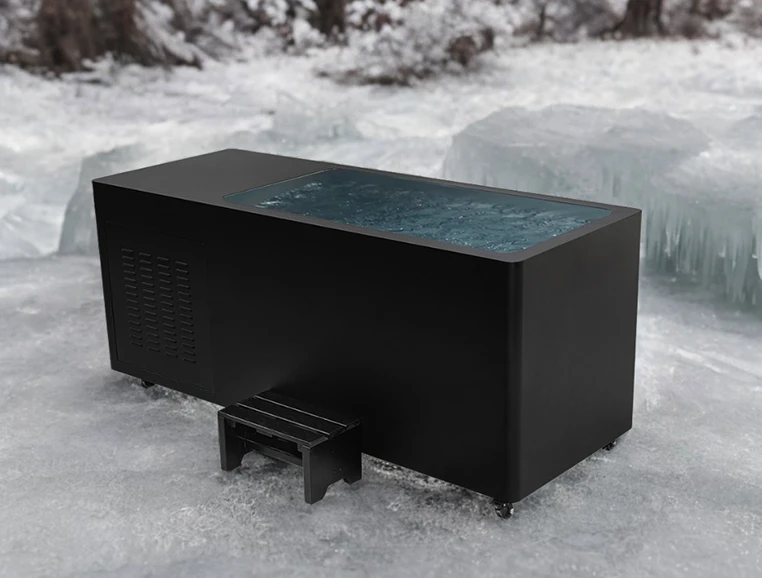
Taking ice baths in winter can be a real challenge for users, but it offers excellent physical benefits. Regular cold plunges can help strengthen the body and enhance immunity.
However, there are some precautions you should take when using ice bath tubs in low temperatures:
- Keep warm: Prepare towels and warm clothes in advance.
- Dry off immediately: After the ice bath, dry your body promptly and put on warm clothing to avoid catching a cold.
- Listen to your body: The extreme cold in winter can cause discomfort. Always monitor how you feel during the bath. If you experience any discomfort, stop the ice bath immediately.
Does Adding Other Cleaning or Antifreeze Chemicals, Such as Glycol Mix, To the Ice Tub Affect the Chiller?
Adding glycol mix or other cleaning or antifreeze chemicals to the ice tub may reduce the chiller’s cooling efficiency and corrode copper tubing and other components.
Reduced cooling efficiency: Glycol mix is a mixture of ethylene glycol, which has a lower thermal conductivity than water. Adding glycol mix to the ice tub may reduce heat transfer efficiency, resulting in a decrease in the chiller’s cooling efficiency.
Corrosion: Some cleaning agents or chemical solvents may corrode metal components like copper tubing and rubber components like rubber rings, shortening their service life. Therefore, avoid adding cleaning agents containing strong acids or bases.
Note: If the incorrect proportions of solvents are added, crystallization and precipitation may occur, clogging pipes, filters, heat exchangers, and other components.
Cold Weather Maintenance Tips to Ensure Long-Term Performance
Chillers encounter many challenges in cold weather. Good cold weather maintenance can maintain the long-term performance of the cold plunge bathtub chiller, ensure the stability and long-term reliability of the equipment, and extend the service life of the equipment.
Check the Condenser Regularly
In cold weather, the condenser may frost, affecting the cooling efficiency of the water chiller for cold plunge. Therefore, it is necessary to regularly check the status of the condenser, remove the frost, and ensure that the condenser can be used normally.
Check the Pipes Regularly
In low temperatures, the pipes will freeze. If the chiller is not used for a long time, you need to make sure to empty the water in the pipes to prevent cracks caused by freezing.
Avoid Frequent Start and Stop
It is difficult to start the compressor at low temperatures. Frequent start and stop will cause wear and tear on the machine and shorten the service life of the compressor. Therefore, when using the refrigeration machine for cooling, it is recommended to adjust the temperature appropriately to avoid frequent temperature adjustments and increase the load on the compressor.
COLDCHILLER cold plunge bathtub chiller can be used normally at a minimum temperature of -5℃. If you want to use a chiller in a low temperature area, we recommend you to choose COLDCHILLER chiller. Our chiller is designed for low temperature environments and has CE, BSCI, PSE, ETL, SAA and other certifications, which are safe and reliable.
You may also be interested in the following chiller-related content:
- Outdoor Ice Bath Setup
- Outdoor Cold Plunge Temperature Control
- How To Properly Maintain and Clean Your Commercial Cold Plunge Chiller
If you want to know more detailed information about the chiller, you can contact us through the chat box on the right.
Get A Quote

Contact Me
Related Post You May Also Like
Ice Plunge Chiller Spacing: How Far Apart Should 2 Units Be?
[pac_divi_table_of_contents exclude_headings_by_class="include" included_headings="off|on|on|off|off|off" active_link_highlight="on" level_markers_3="icons" title_container_padding="10px|15px|10px|15px|true|false" title_container_bg_color="#333333"...

How to Manage Condensation Water in an Indoor Cold Plunge?
[pac_divi_table_of_contents exclude_headings_by_class="include" included_headings="off|on|on|off|off|off" active_link_highlight="on" level_markers_3="icons" title_container_padding="10px|15px|10px|15px|true|false" title_container_bg_color="#333333"...
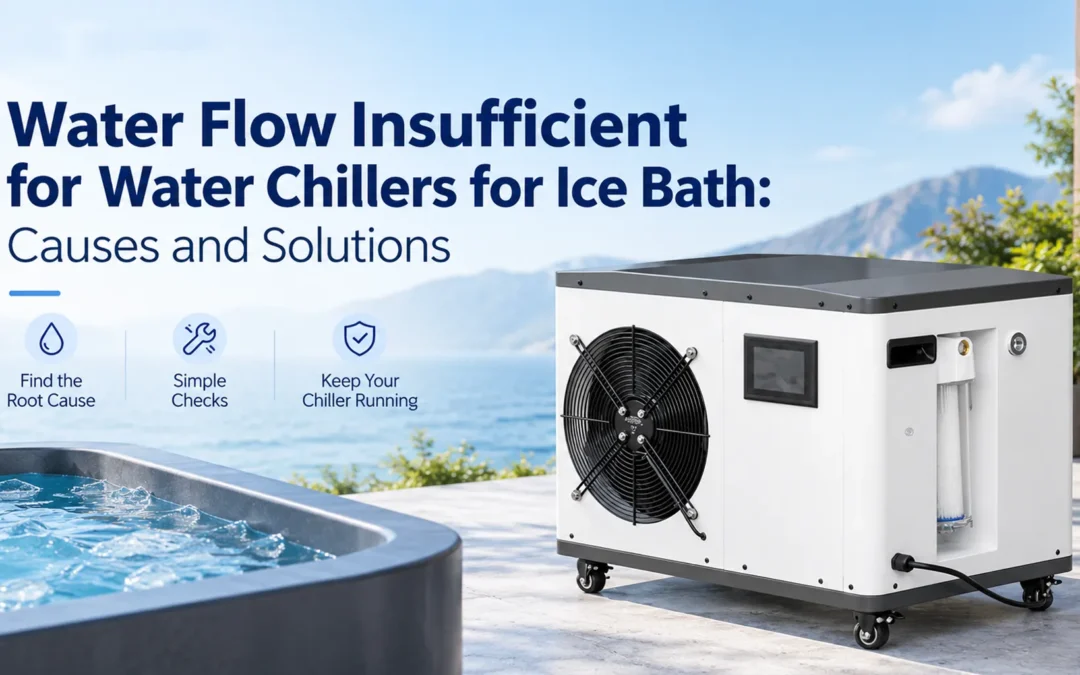
Water Flow Insufficient for Water Chillers for Ice Bath: Causes and Solutions
[pac_divi_table_of_contents exclude_headings_by_class="include" included_headings="off|on|on|off|off|off" active_link_highlight="on" level_markers_3="icons" title_container_padding="10px|15px|10px|15px|true|false" title_container_bg_color="#333333"...

Best Cold Plunge Tub for Tall People: Buying Guide
[pac_divi_table_of_contents exclude_headings_by_class="include" included_headings="off|on|on|off|off|off" active_link_highlight="on" level_markers_3="icons" title_container_padding="10px|15px|10px|15px|true|false" title_container_bg_color="#333333"...
0 Comments