
Coldchiller Ice Bath Chillers: Refrigerants & Safety Guide

In the ice bath chiller unit market, refrigerant is the core medium for heat exchange. Its type selection and charging specifications directly affect the equipment’s cooling efficiency, operational stability, and lifespan. Recently, customers purchasing ice bath equipment from Coldchiller have raised some technically challenging questions, such as:
- Can different models of your ice bath chiller units use different types of refrigerant?
- Can refrigerant types be switched arbitrarily?
- Is the refrigerant charging amount standardized?
- Why do some units not come with refrigerant?
- What are the precautions for refrigerant charging?
These questions, seemingly simple to answer, actually involve multiple technical aspects, including ice bath refrigeration system design, safety regulations, and international refrigerant transportation standards. As a high-end ice bath manufacturer in China, Coldchiller possesses years of mature experience and a comprehensive technical system in refrigeration unit technology, providing users with various solutions related to ice bath refrigeration units.
This article from Coldchiller will share with you the rules for selecting refrigerant models, transportation, charging standards, and operational matters for our entire range of refrigeration units, helping you to better understand our ice bath refrigeration units.
Refrigerant Selection: Compatibility with the Full Range of Coldchiller Chillers?
Yes, different types of refrigerants can be used in the entire Coldchiller chiller range, but certain conditions apply. The choice of refrigerant directly affects the operating efficiency, environmental friendliness, and safety of the refrigerant system. We strictly adhere to the refrigerant usage standards of different countries and regions to provide users with suitable refrigerant solutions for ice bath chillers. Specific conditions are as follows:

According to the National and Regional Regulations and Standards
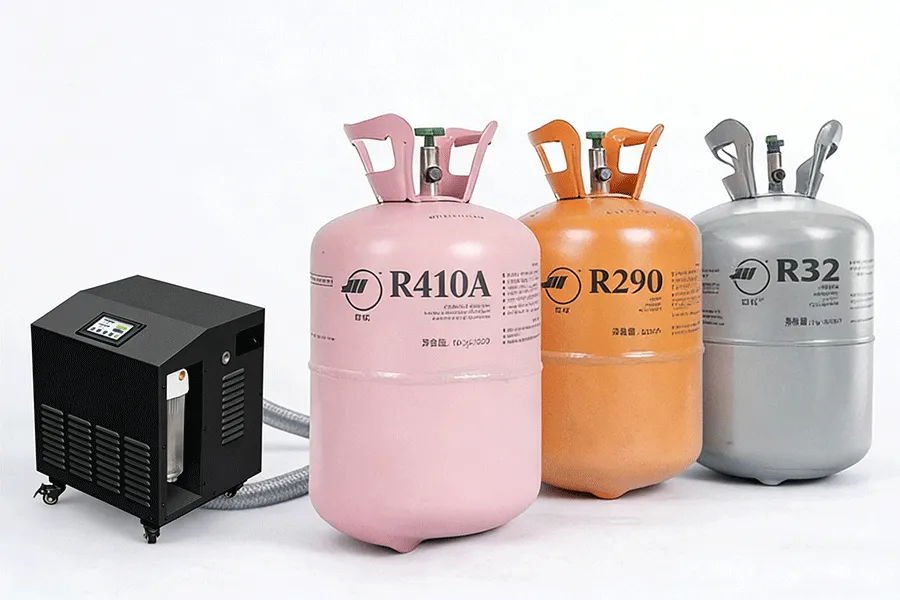
Coldchiller specifies the corresponding refrigerant type from the initial design stage of its ice bath refrigerators, based on the regulations and safety standards of different countries and regions. Firstly, according to environmental regulations, Europe and the United States have strict limits on greenhouse gas emissions (GWP values), they prefer to use low-GWP refrigerants such as R290 or R32.
Secondly, for regions such as North America, Australia, and Japan, where regulations on the use of flammable refrigerants differ, R410A refrigerant is primarily used. Compared to R290 and R32 refrigerants, R410 refrigerant offers higher cooling efficiency, greater stability, and better safety, and is widely used in various refrigeration equipment.
Note: Different refrigerant types require different compressors, condensers, and other components in immersion refrigeration units. Coldchiller will match the appropriate core components to the refrigerant type based on the customer’s country. Once confirmed, the refrigerant cannot be switched arbitrarily to ensure safe use.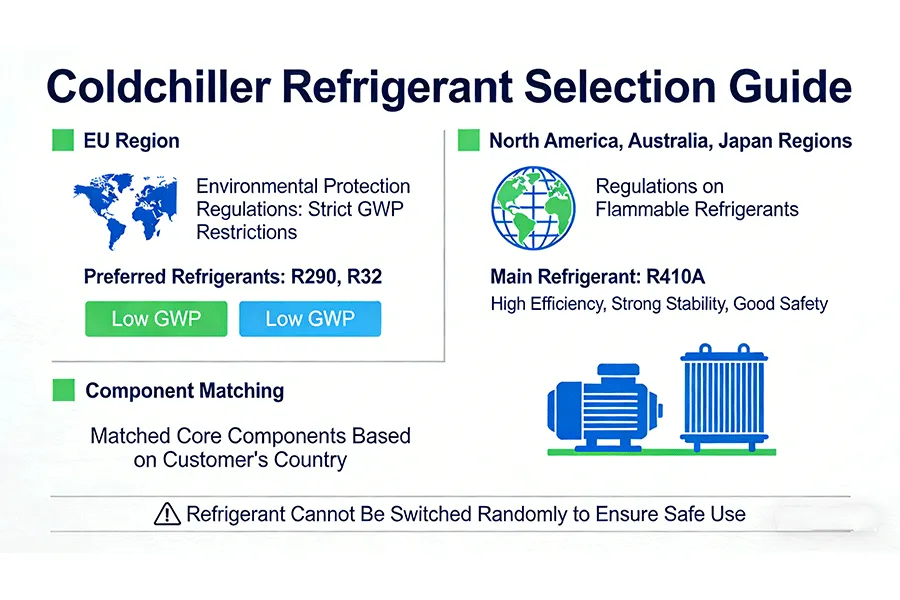
Refrigerant Transportation and Risks
Due to differences in the physical properties and safety levels of different chillers, refrigeration units have varying transportation requirements. Some cold plunge chiller units can be transported as a whole with refrigerant, while others cannot. Coldchiller has developed specific solutions for different countries based on relevant international safety standards, as follows:
R410A Refrigerant
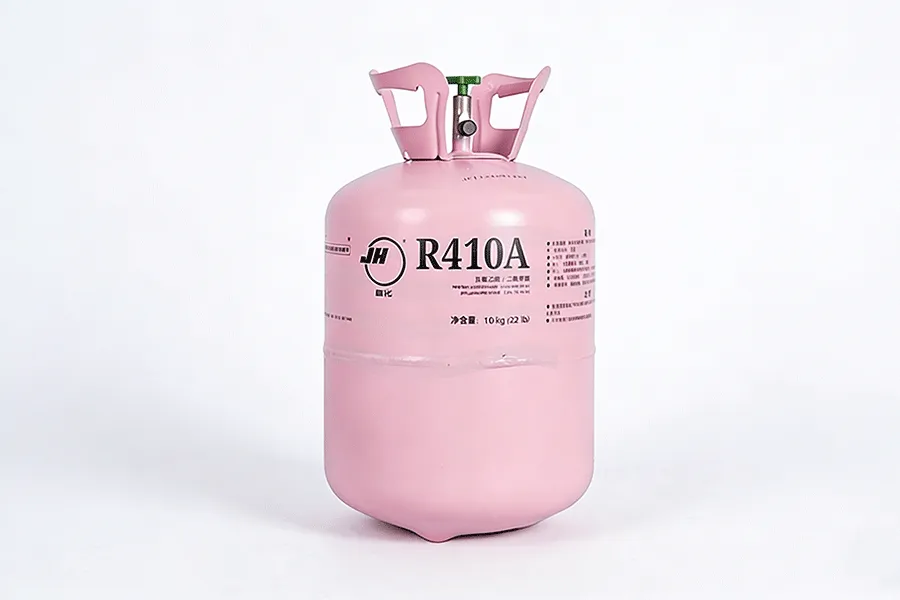
Firstly, R410A refrigerant is non-flammable and non-explosive, possessing high safety performance and complying with most international logistics standards. Under normal transportation conditions, it typically does not pose a risk of leakage, combustion, or explosion. Therefore, R410A can be directly transported as a whole with ice bath chiller equipment.
R290 and R32 Refrigerants
However, R290 (propane) and R32 refrigerants are flammable and explosive media. Although they have excellent environmental performance, when their vapors mix with air and reach a certain concentration, they can ignite or explode upon contact with open flames or static electricity. Therefore, for ice bath refrigeration units shipped to the EU, we always advise customers to add a chiller locally upon receipt of the product.
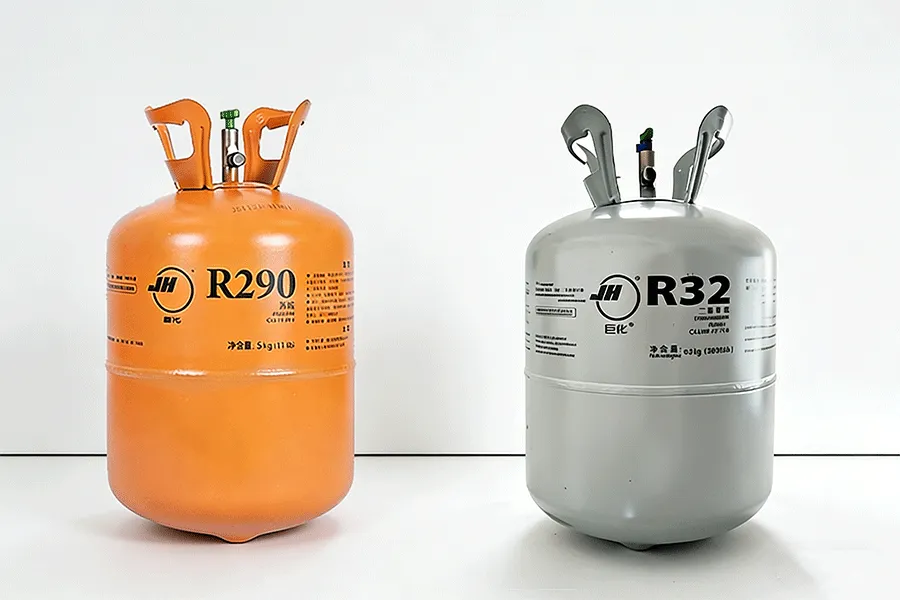
Of course, to handle this special situation, we also take special protective measures to ensure the equipment remains intact during transportation and to ensure safe refrigerant charging for customers afterwards. Typically, for refrigeration units using R290 and R32 ice bath chiller, Coldchiller will charge the unit with 10 kg of nitrogen (equivalent to 1 MPa) before shipment to ensure the piping remains intact after bumpy transport.
Note: Nitrogen is an inert gas, chemically stable, non-flammable, and non-explosive. It will not react chemically with the equipment piping and can also form a protective seal.
Refrigerant Charge and Safety Rules
At Coldchiller, regardless of the specific ice bath chiller you choose, there’s a crucial point you must understand before adding refrigerant: “Pressure Check!” This is not only essential for safety during cold plunge chiller charging but also a vital step in ensuring the equipment operates normally.
Pressure Gauge Test
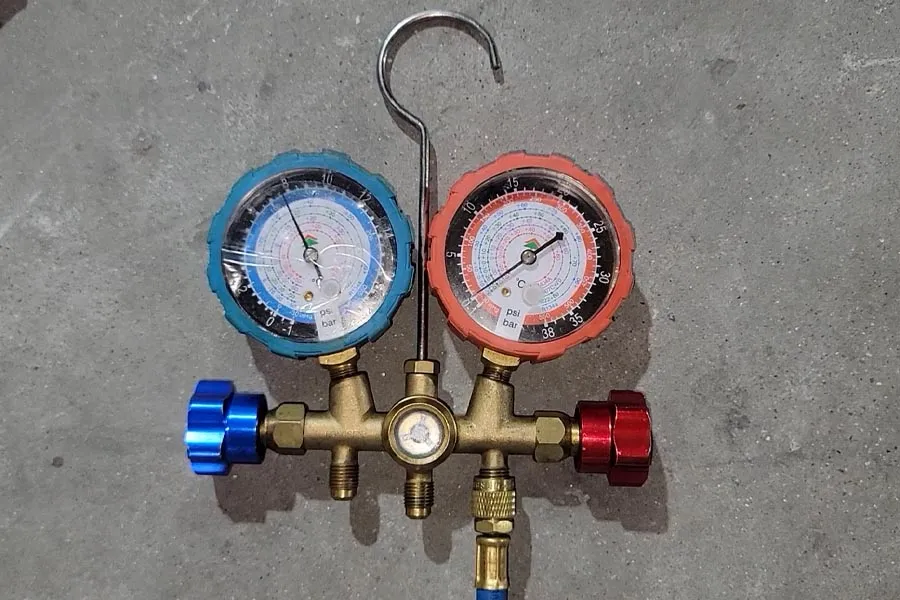
We typically use a pressure gauge to check the piping seals of the ice bath chiller. If the pressure gauge reading is normal, it indicates that the piping is sealed properly, with no damage or refrigerant leaks, and refrigerant can be added as normal.
If the pressure gauge reading is abnormal, it indicates damage to the chiller piping or a refrigerant leak. Adding refrigerant in these situations is strictly prohibited. Insisting on adding refrigerant will not only fail to achieve the desired cooling effect but may also damage core components such as the compressor and even create safety hazards. Especially with R290 or R32 refrigerants, leaks can mix with air in the pipes, forming an explosive mixture.
Can I Add Refrigerant Myself?
It is not recommended. Refrigerant handling is a highly specialized operation, and improper handling can directly affect the chiller unit’s cooling performance and pose safety hazards. After checking the pressure gauges and testing, it is usually necessary to use a vacuum pump to evacuate the internal system, ensuring there is no air or moisture inside. Otherwise, moisture can form ice, hindering refrigerant circulation, reducing the refrigeration efficiency, and even generating corrosive substances that can damage pipes, compressors, and other core components. For this specialized procedure, Coldchiller suppliers strongly recommend hiring professionals to operate.
Is There a Standardized Value For Refrigerant Charging?
Regarding the question of whether customers agree on a standard for refrigerant charging, it is important to clarify that there is no fixed value for refrigerant charging. The specific value needs to be determined based on the equipment configuration and design. Different Coldchiller ice bath chiller unit models have different cooling capacities, pipe lengths, and core component specifications; the required refrigerant charging will also vary.
Of course, to help customers understand the specific refrigerant charge and detailed parameters of the equipment, Coldchiller has installed nameplate information on the side of all models of its ice bath chiller units. This information includes key parameters such as refrigerant type, refrigerant charge amount, rated power, and cooling capacity, allowing customers to directly access this information.
Note: When adding refrigerant, it is crucial to strictly follow the information on the nameplate. Adding too much or too little refrigerant will adversely affect the operation of the chiller unit.
Conclusion
In summary, refrigerant is crucial, not only as the fundamental medium for achieving cold circulation in a cold plunge chiller, but also as a core factor determining equipment performance, stability, and safety. For the entire Coldchiller series of ice bath chillers, refrigerant selection must be scientifically matched and used in accordance with relevant national regulations and safety standards. For example, the EU uses R290/R32, while North America, Australia, and Japan use R410A. Furthermore, regardless of the model of refrigerator you choose, a different chiller must be matched with the corresponding compressors and system structures; arbitrary replacement or mixing is strictly prohibited.
Standardized refrigerant selection and professional charging procedures are key to ensuring the safe, efficient, and stable operation of the ice bath chiller. Therefore, operations must be performed by qualified personnel, and unauthorized charging should be strictly avoided.
FAQs
Question1: What To Do If The Pressure Gauge Is Abnormal?
Answer:
1. Immediately stop all charging operations.
2. Conduct a systematic leak check.
3. Locate and repair the leak.
4. Perform a fine pressure test again (charge with nitrogen and confirm that the pressure does not drop steadily).
5. Vacuum evacuation.
6. Recharge refrigerant.
Note: An abnormal pressure gauge does not necessarily mean a refrigerant leak. It could be due to nitrogen depressurization during transportation, temperature changes affecting pressure, gauge errors or damage, or air entering the system.
Question2: How To Determine If The Refrigerant is Insufficient?
Answer:Common signs of insufficient chiller include a slower cooling speed of the refrigerator, inability to reach the set temperature, continuous compressor operation with poor overall performance, and abnormal noise.
Question3: What To Do If There Is a Refrigerant Leak?
Answer:If you suspect a refrigerant leak or that a leak is in progress, you should first turn off the power switch, then contact a professional technician to inspect and repair the refrigerator, and finally recharge the refrigerant.
Get A Quote

Contact Me
Related Post You May Also Like

Cold Plunge Tub Buying Guide: Commercial vs Home Use
[pac_divi_table_of_contents exclude_headings_by_class="include" included_headings="off|on|on|off|off|off" active_link_highlight="on" level_markers_3="icons" title_container_padding="10px|15px|10px|15px|true|false" title_container_bg_color="#333333"...

Cold Plunge Barrel vs Tub: Key Differences?How to Choose?
[pac_divi_table_of_contents exclude_headings_by_class="include" included_headings="off|on|on|off|off|off" active_link_highlight="on" level_markers_3="icons" title_container_padding="10px|15px|10px|15px|true|false" title_container_bg_color="#333333"...

Cold Plunge Chiller Transport:Fumigation Guidelines
[pac_divi_table_of_contents exclude_headings_by_class="include" included_headings="off|on|on|off|off|off" active_link_highlight="on" level_markers_3="icons" title_container_padding="10px|15px|10px|15px|true|false" title_container_bg_color="#333333"...

The Sauna & Ice Bath Opportunity You Can’t Ignore
[pac_divi_table_of_contents exclude_headings_by_class="include" included_headings="off|on|on|off|off|off" active_link_highlight="on" level_markers_3="icons" title_container_padding="10px|15px|10px|15px|true|false" title_container_bg_color="#333333"...
0 Comments