
The Best Outdoor Cold Plunge Guide for Coastal Cities

The beautiful ocean view is accompanied by high salt and humidity levels in the air, which can silently corrodes equipment.
This article delves into material properties, offering a clear guide to selecting and using outdoor cold plunge tubs for coastal cities.
How Coastal Environments Affect Cold Plunge Lifespan
First, salt particles will inevitably adhere to the surfaces of outdoor cold plunge equipment, such as the outer shell of cold plunge tubs, metal parts, and the casing of outdoor cold plunge chillers. Long-term accumulation accelerates metal corrosion and shortens the equipment’s lifespan.
Second, coastal areas maintain year-round humidity levels of 70–90%, leading to metal corrosion, mold growth on wood, and decreased performance of the cold plunge chiller.
Finally, outdoor cold plunge tubs face additional environmental threats including strong UV exposure, daily temperature fluctuations, and windy and dusty. These factors pose significant challenges to the durability of both outdoor cold plunge tubs and cold plunge chillers.
Material Performance of Outdoor Cold Plunges in Coastal Areas
ColdChiller offers outdoor cold plunge tubs in various materials—so which ones are bester suited for coastal environments?
Stainless Steel
Stainless steel offers exceptional corrosion resistance and impact strength, and does not suffer from aging problems caused by UV rays, making it one of the most reliable materials for coastal environments.
ColdChiller provides 304 or 316 stainless steel, with 316 stainless steel delivering the most outstanding performance, though it comes at a relatively higher price.
Solid Wood
Long-term coastal humidity levels of 70–90% make wood more prone to warping, deformation, and mold growth. Simply put, to ensure the long-term use of wooden outdoor cold plunge tubs by the sea, you need the right wood species + proper treatment + protective coating.
First, choose moisture-resistant and rot-resistant woods like red cedar, rusty cedar, hinoki, or heat-treated hemlock. Second, apply extra weatherproofing treatments such as exterior varnish or wood oil coatings. Finally, the coating must be regularly reapplied.
Acrylic
The advantage of the acrylic sheets we use lies in their resistance to salt spray corrosion and high UV resistance. The disadvantage is that they are susceptible to abrasion.
Coastal winds and sand can easily wear down the acrylic surface, resulting in fine scratches. While these scratches do not affect the structural strength, they do affect its aesthetic appeal.
Galvanized Metal Painted Panels
Galvanized metal painted panels offer double protection through their galvanized coating and paint layer, providing sufficient resistance against corrosion in daily environments. However, when applied in coastal environments characterized by high humidity and salt exposure, this system reveals its limitations.
Although the paint layer can temporarily block salt spray, prolonged exposure accelerates paint film aging and galvanized layer depletion. This ultimately leads to coating peeling, exposing the metal substrate, and allowing rust to spread throughout the entire structure.
Coastal Performance of Cold Plunge Chillers
ColdChiller’s cold plunge chillers are meticulously engineered for outdoor use. Their galvanized steel casings feature outdoor-grade weather-resistant powder coating, effectively withstanding sun exposure, wind, and rain. Internal coolers are constructed from stainless steel or titanium to ensure stable operation in humid conditions.
Users can also opt for a stainless steel filter element to further enhance the equipment’s adaptability in coastal areas. Additionally, all metal components—including fans, screws, and wheels—are crafted from 304 stainless steel, truly demonstrating that every detail is engineered for outdoor use.
If the outdoor cold plunge chiller needs to be placed in a high-salt, high-humidity coastal area for an extended period, we recommend installing a waterproof cover or protective enclosure to provide additional safeguards and extend the equipment’s service life.
Indoor vs. Outdoor Cold Plunge for Coastal Cities
Clearly, the closer to the sea, the more serious and more intense the natural threats to cold water bathtubs become.
In areas within 200 meters of the sea, strong sea breezes carry high concentrations of salt and moisture.
We strongly recommend installing a cold plunge tub indoors or in semi-outdoor spaces with effective rain and sun protection (such as enclosed balconies or under a canopy) to avoid direct exposure to salt spray and UV rays.
For locations 200-500 meters from the sea, outdoor cold water tubs can be considered, but a corrosion-resistant tub must be chosen and protective measures taken, such as using an ice bath spaceship cover.
In urban areas over 500 meters from the sea, the installation of a cold plunge tub is not restricted by indoor or outdoor location, but it still requires more frequent maintenance than in inland areas.
Cold Plunge Chiller: Built-In or Exposed?
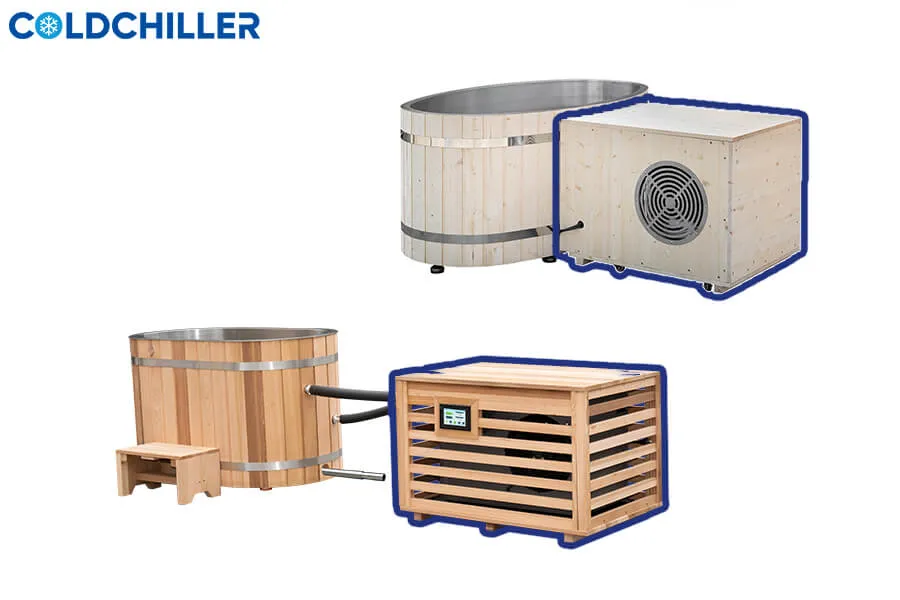
ColdChiller cold plunge tubs are categorized into two main types: integrated integrated cold plunge units and standard tubs paired with an exposed cold plunge chiller.. Many customers are curious about the advantages and disadvantages of these two types and which is more suitable for coastal environments. Below is a comprehensive comparison of both types:
| Item | Integrated Cold Plunge Tub Unit | Standard Cold Plunge Tub (Exposed Chiller) |
|---|---|---|
| Cold-plunge chiller placement | The cold-plunge chiller is built inside the outer cavity of the tub. | The cold-plunge chiller sits independently outside the tub body. |
| Aesthetics | High | Medium |
| Heat dissipation performance | Medium, dependent on ventilation grilles. | High |
| Maintenance convenience | Medium — maintenance doorcan be opened to pull out the cold plunge chiller | High |
| Cold plunge chiller salt-mist corrosion risk | Low — the chiller is not directly exposed to salt mist. | High — the chiller is directly exposed to salt mist. |
Given the unique coastal environment, we should prioritize the risk of corrosion o the ice bath equipment. Therefore, as shown in the table above, integrated cold plunge tub units are better suited for coastal use.
Key Buying Tips for Cold Plunge Tubs
Materials: Stainless steel > Solid wood > Acrylic > Galvanized metal painted sheet
Cold plunge tub models: Integrated unit> Standard models (Exposed cold plunge chiller)
Installation locations: Indoor > Semi-outdoor > Outdoor
In general, when facing a coastal environment, having protective measures is always better than having none. Additionally, we recommend that customers in coastal areas install protective features such as awnings or covers around your outdoor cold plunge tub and cold plunge chiller.
Best Outdoor Cold Plunge Tubs Ranked
Among all types of cold plunge tubs, which one performs best in outdoor settings? Which one is more suitable for use by the sea?
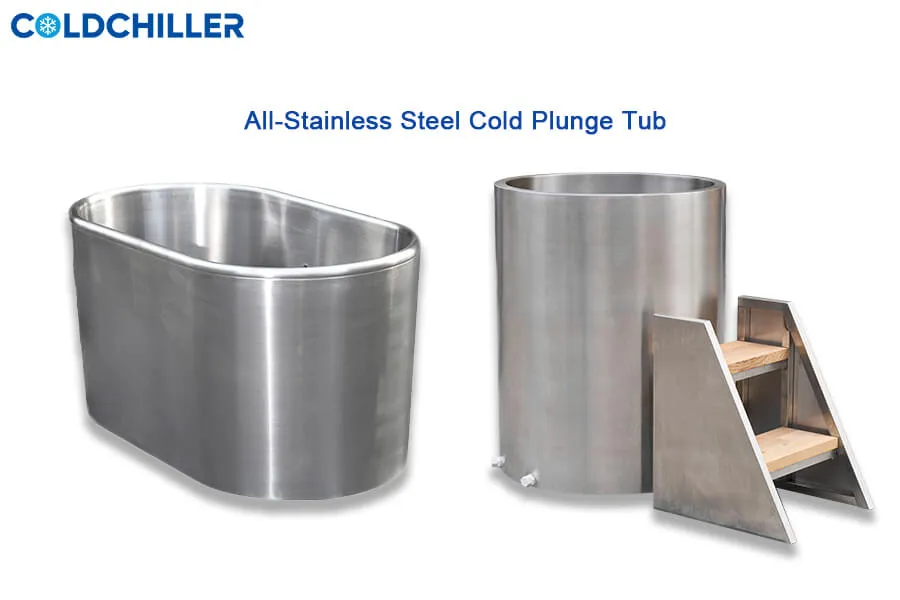
All Stainless Steel Cold Plunge Bathtub
First and foremost, we highly recommend the all-stainless steel cold plunge bathtub. Both the outer shell and inner liner of this ice bath tub are crafted from stainless steel, making it completely resistant to sea breezes, salt spray, and UV rays—the toughest outdoor cold plunge tub available. Opting for 316 stainless steel further enhances its weather resistance by 3-5 times.
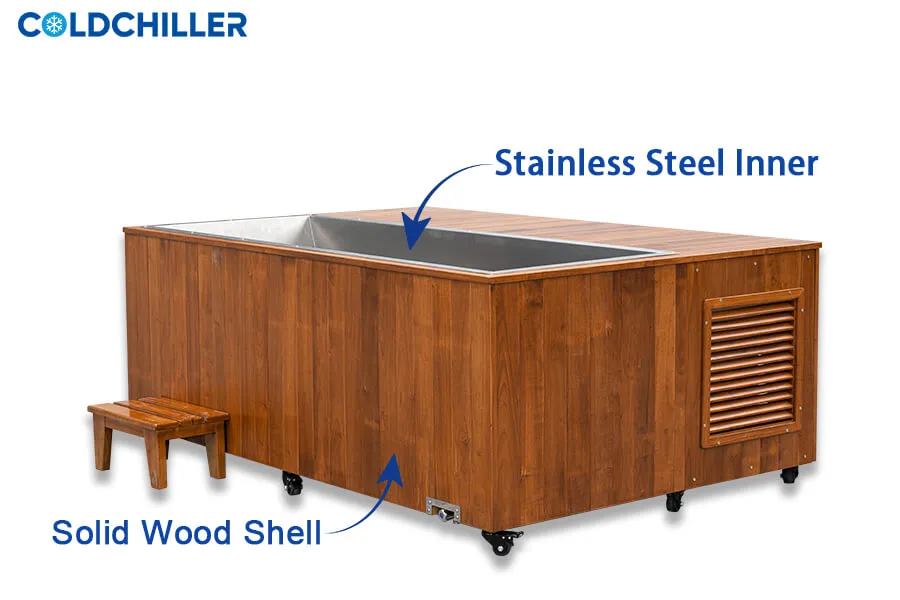
Wood Exterior + Stainless Steel Inner Integrated Cold Plunge Tub
Constructed with high-quality rot-resistant woods like red cedar and cypress for the exterior, paired with a 304 or 316 stainless steel liner, this design offers an excellent solution for coastal environments. This integrated ice bath tub also houses the cold plunge chiller within the wooden structure, further reducing the risk of corrosion. Wood is inherently rot-resistant; with diligent maintenance, it will last for a long time.
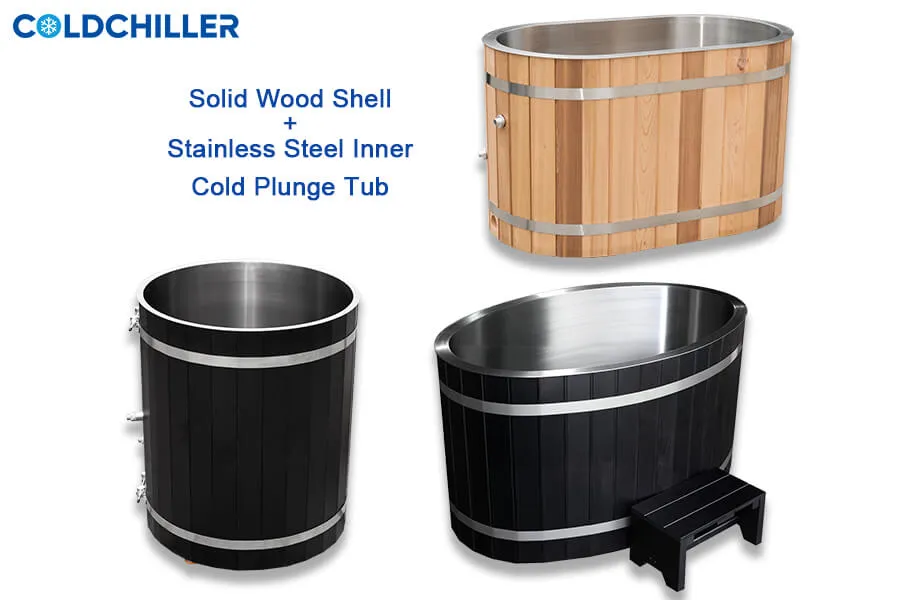
Wood Exterior + Stainless Steel Inner Cold Plunge Tub
The advantage of wood exterior + stainless steel inner cold plunge tub lies in its exceptional stainless steel inner tub. When using corrosion-resistant wood for the exterior, we advise customers who love this design to still pay attention to frequent cleaning and maintenance when using it in coastal environments.
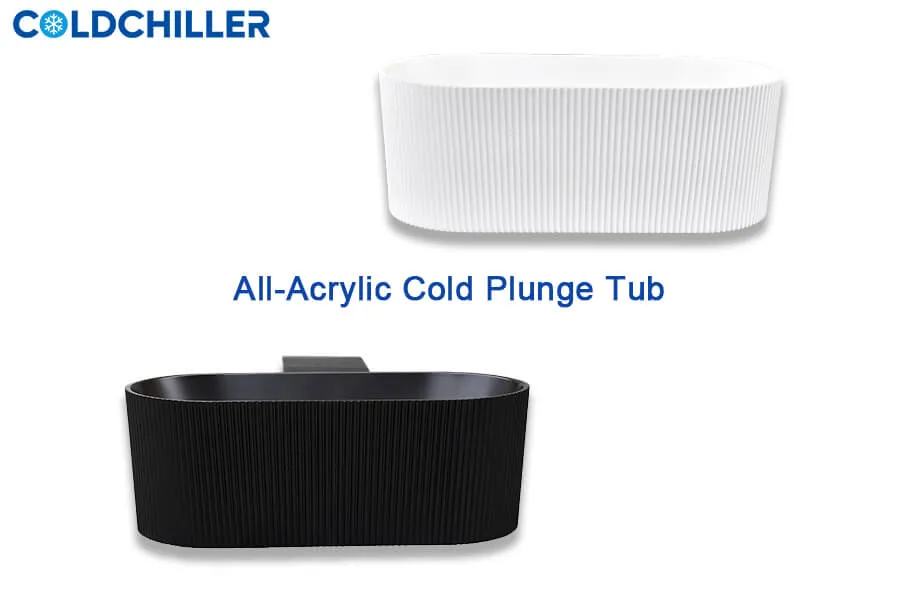
All Acrylic Cold Plunge Tub
This cold plunge tub is entirely made of UV-resistant acrylic. Featuring a modern, minimalist design, it resists corrosion and aging. However, its susceptibility to abrasion makes it unsuitable for outdoor use. If you intend to use it in a coastal environment, we strongly recommend installing it indoors.
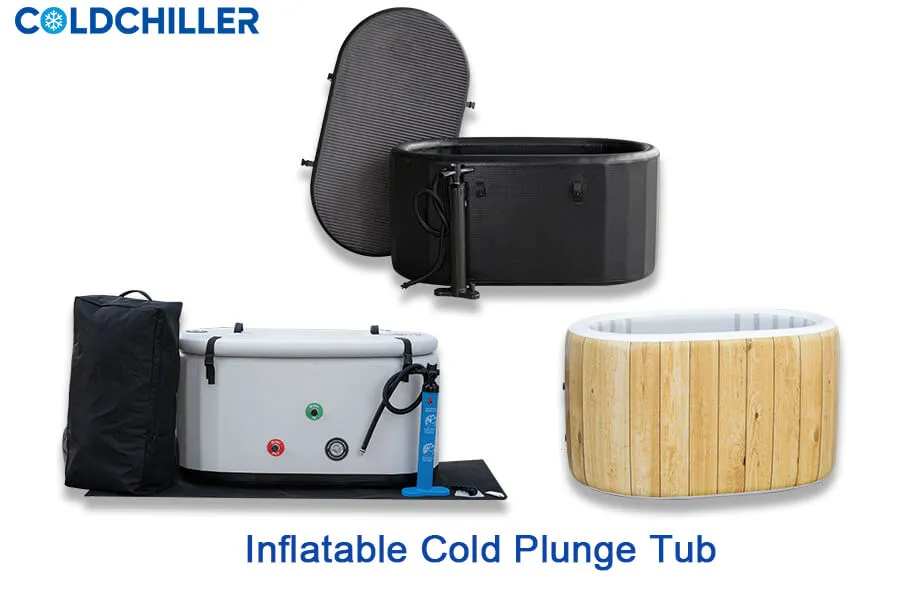
Inflatable Cold Plunge Tub
This inflatable cold water bathtub is made of PVC and is not suitable for environments with strong UV rays and high salinity, such as beaches. Although it is inexpensive, it is only suitable for short-term or temporary use at the beach.
Metal Exterior + Stainless Steel Inner Liner integrated cold Plunge tub
This model of cold plunge tub has an excellent inner liner material, but the metal-painted casing is susceptible to corrosion from salt spray. It is more suitable for customers not located in coastal areas.

Coastal Cold Plunge Use and Maintenance Tips
Coastal environments are characterized by salt spray, high humidity, strong UV exposure, and strong winds carrying sand. People in coastal cities should pay particular attention to the following points when using cold plunge tubs, especially outdoor units placed by the sea.
Rinse off Salt and Sand from Your Body before Use
Seawater and sand entering the ice bath tub can cause the water to become muddy and clog the filter. Therefore, you must rinse off any seawater and sand from your body before use.
Regular Freshwater Rinsing: Critical for Metal Components
Salt deposits on the cold plunge chiller casing and bathtub surfaces accelerate corrosion. Therefore, it is recommended to rinse the cold plunge chiller housing and other metal components with fresh water once a week. Allow the equipment to dry completely after rinsing to prevent water accumulation.
Regularly Clean Vents and Filters to Prevent Clogging
Coastal areas experience high levels of sand and dust, so the vent covers should be checked and cleaned weekly.
Filters are critical for maintaining water quality. We should regularly inspect, clean, or replace filters. For commercial ice baths that are used daily, clean the filter at least once a week.
Regularly Inspect Metal Parts for Corrosion
Monthly inspect screws, handles, and other metal components for rust. If rust is detected, first use a rust remover and fine sandpaper to gently polish the surface. After thoroughly cleaning and ensuring the area is completely dry, apply a weather-resistant paint for touch-up.
Maintain Weather-Resistant Coating on Wood
The lifespan of coatings such as wood wax oil, varnish, and outdoor preservative clear oil on the surface of wooden outdoor cold plunge tubs made of wood will be shortened in coastal areas. Therefore, we should increase the frequency of regular maintenance and shorten the maintenance cycle.
Regularly Clean the Cold Plunge Tub Surface
Clean the Cold Plunge tub surface at least once a month using soapy water or a neutral detergent and a soft cloth. Never use abrasive cleaners or stiff brushes.
Conclusion
If you are planning outdoor cold plunge facilities for your beachfront hotel, resort, or high-end residential project, please contact ColdChiller. Our team is ready to provide you with more detailed technical specifications and configuration options tailored to your region.
FAQ
Frequently Asked Questions
Q1:Which material should be prioritized for outdoor cold plunge tubs in coastal projects?
Answer:For coastal projects, 316 stainless steel is usually the preferred choice. Wooden casings are also a good option, but require frequent maintenance.
Q2: Can an outdoor cold plunge tub be placed completely outdoors in a beachfront location?
Answer:We do not recommend this, as it will significantly shorten its lifespan
Q3:Is the outdoor cold plunge chiller waterproof and suitable for outdoor use?
Answer:Our outdoor cold plunge chiller has an IPX4 waterproof rating, sufficient for daily outdoor use.
Get A Quote

Contact Me
Related Post You May Also Like

Ice Plunge Chiller Spacing: How Far Apart Should 2 Units Be?
[pac_divi_table_of_contents exclude_headings_by_class="include" included_headings="off|on|on|off|off|off" active_link_highlight="on" level_markers_3="icons" title_container_padding="10px|15px|10px|15px|true|false" title_container_bg_color="#333333"...

How to Manage Condensation Water in an Indoor Cold Plunge?
[pac_divi_table_of_contents exclude_headings_by_class="include" included_headings="off|on|on|off|off|off" active_link_highlight="on" level_markers_3="icons" title_container_padding="10px|15px|10px|15px|true|false" title_container_bg_color="#333333"...

Water Flow Insufficient for Water Chillers for Ice Bath: Causes and Solutions
[pac_divi_table_of_contents exclude_headings_by_class="include" included_headings="off|on|on|off|off|off" active_link_highlight="on" level_markers_3="icons" title_container_padding="10px|15px|10px|15px|true|false" title_container_bg_color="#333333"...

Best Cold Plunge Tub for Tall People: Buying Guide
[pac_divi_table_of_contents exclude_headings_by_class="include" included_headings="off|on|on|off|off|off" active_link_highlight="on" level_markers_3="icons" title_container_padding="10px|15px|10px|15px|true|false" title_container_bg_color="#333333"...
0 Comments