
Ice Bath Chiller Condenser Fin: Copper vs Aluminum Comparison
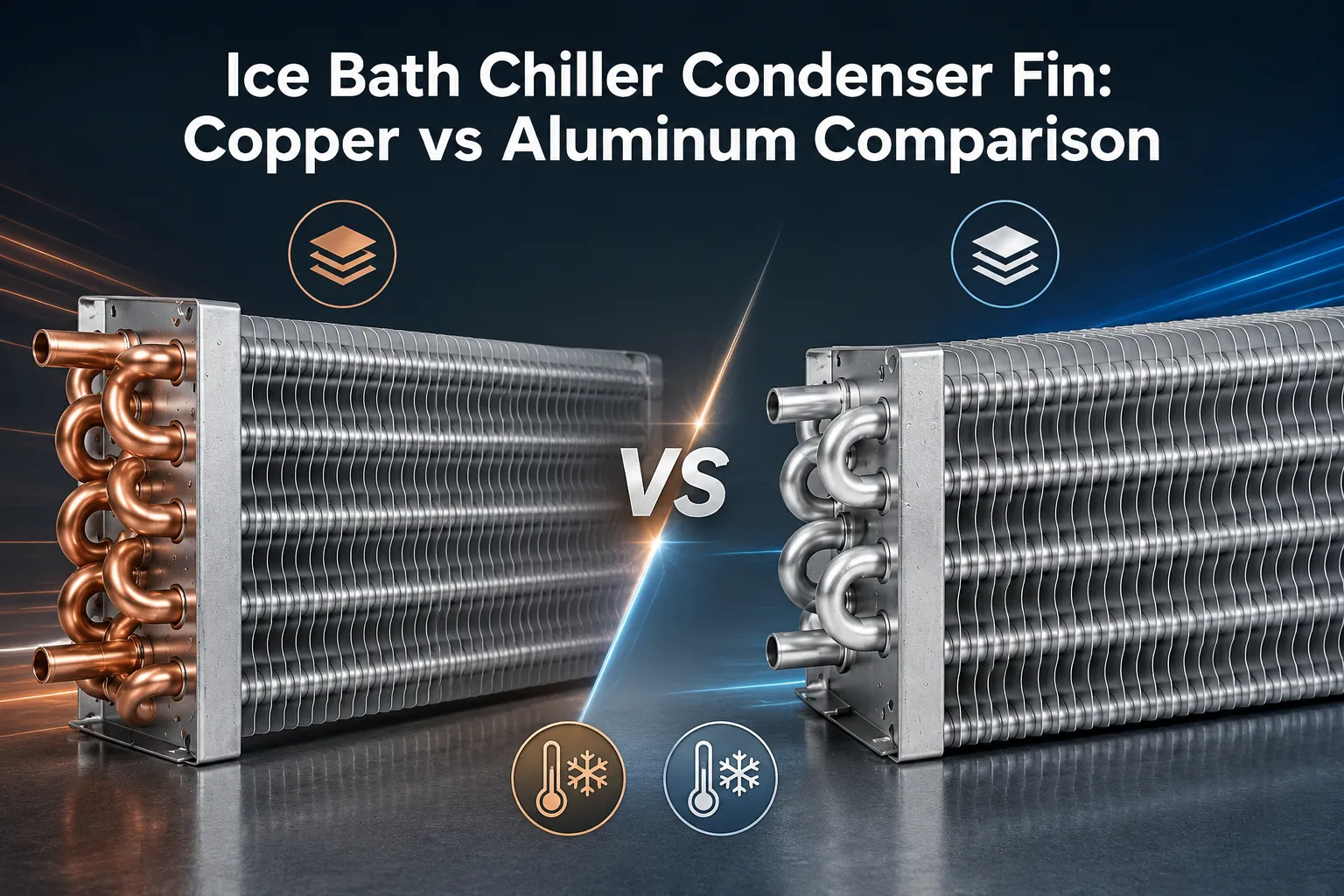
Considering long-term stability, heat dissipation performance, and corrosion resistance, copper condenser fin heat exchangers for cold plunge chillers deliver superior overall quality compared to aluminum condenser fin variants, making them the top pick for high-load, complex commercial projects. Cold plunge chiller heat exchangers fitted with aluminum condenser fins carry a lower price point. Aluminum condenser fins are manufactured in two variants: hydrophilic aluminum foil and hydrophobic aluminum foil. All aluminum-fin cold plunge chiller units from Coldchiller adopt premium hydrophilic aluminum foil to achieve balanced, efficient heat exchange.
For standard indoor venues with moderate visitor volume, cold plunge chillers equipped with heat exchangers made from hydrophilic aluminum
foil condenser fins boast excellent cost performance and fully satisfy routine cooling demands. For harsh, complicated operating environments, copper condenser fin heat exchangers are a mandatory priority. At present, Coldchiller cold plunge chillers are predominantly outfitted with premium copper condenser fins. Many competing brands cut production expenses by utilizing basic aluminum condenser fins to slash retail pricing. Numerous buyers struggle to tell copper and aluminum condenser fins apart and often raise these key questions: What are the disparities between copper and aluminum chiller heat exchangers fitted with condenser fins for cold plunge chillers? Which material delivers superior cooling and heat dissipation performance?
Copper vs Aluminum Condenser Fins for Cold Plunge Chillers
Many people believe copper condenser fins have higher thermal conductivity and therefore deliver far faster cooling. In fact, their key differences do not lie in instant cooling capacity, but in service life, long-term maintenance costs and corrosion resistance. Copper condenser fins are a premium configuration focused on long-term operational stability and higher reliability in harsh environments such as humid or coastal areas. Aluminum condenser fins feature cost efficiency and lightweight design, and there are clear overall performance gaps between the two materials.
1.How to Distinguish Copper Condenser Fins from Aluminum Condenser Fins by Appearance
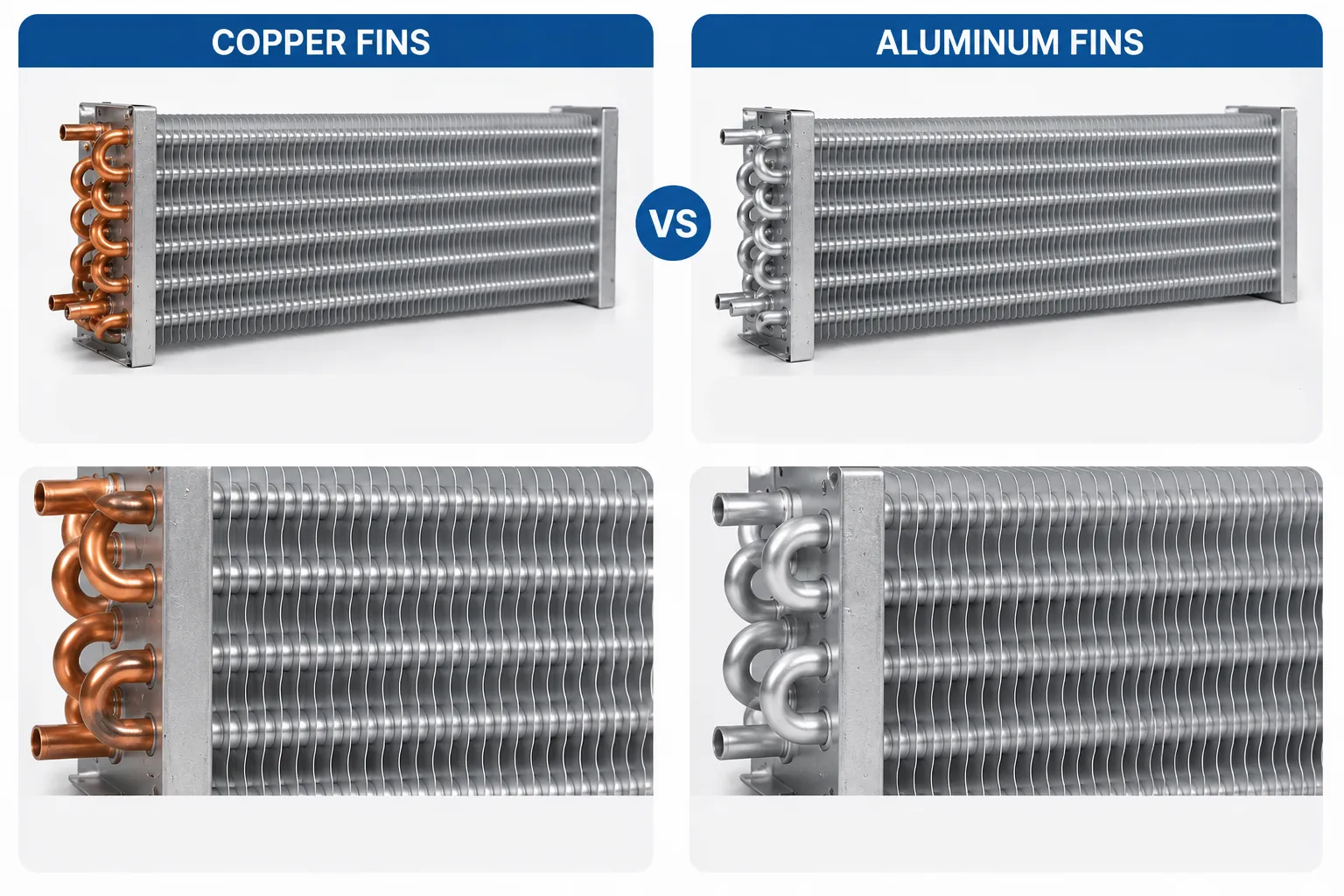
This picture clearly shows the physical differences between the two mainstream heat exchangers. The upper and lower groups display the full machine view and close-up shots of the condenser coil respectively, allowing you to tell the materials apart at a glance. The condenser coil of the copper fin heat exchanger on the left features the distinctive natural red copper color; the fins and copper tubes are integrally formed with stable chemical properties. On the right, all condenser coils and cooling fins of the aluminum fin heat exchanger are silver-gray aluminum with a uniform visual tone. Although the surface cooling fins of aluminum fins look similar in arrangement density and structure, the base materials of the internal heat exchange pipelines are completely different.
2.How Does Condenser Fin Material Affect the Operation of Cold Plunge Chillers
The material of condenser fins for cold plunge chillers affects not only heat exchange efficiency, but also directly impacts equipment service life, operational stability and long-term maintenance costs. For commercial projects such as ice bath centers, selecting the right condenser fin material can effectively reduce equipment failure risks and boost reliability for long-term operation.
Fins with excellent thermal conductivity dissipate heat faster, keeping the refrigeration system running steadily at all times. When the cold plunge chiller operates under heavy cooling loads, efficient heat dissipation maintains the unit’s normal working temperature, reduces frequent start-stop cycles and prolonged high-load operation, and extends the service life of core components.
If condenser fins suffer from long-term corrosion, dust buildup or degraded heat dissipation efficiency, heat cannot be discharged in a timely manner. The cold plunge chiller will have to run continuously at higher power to reach the target water temperature. Over time, this will not only raise power consumption, but also accelerate the aging of the chiller and its accessories, further increasing failure rates and repair expenses.
In addition, the durability of condenser fins affects daily maintenance work. Fins with low structural strength are prone to deformation and damage during transportation, installation or cleaning, requiring extra time for maintenance and repairs. In contrast, fins with a more robust structure and outstanding corrosion resistance cut down maintenance frequency, keep the cold plunge chiller operating optimally over the long run, and deliver consistent, reliable cooling support for commercial operations.
3.Comparison of Heat Exchange Performance: Copper vs Aluminum Condenser Fins
Thermal conductivity is the core indicator that determines the practical performance of copper and aluminum condenser fins inside cold plunge chillers. According to physical parameters, copper boasts higher thermal conductivity than aluminum. It transfers heat faster and more steadily during the temperature regulation cycle of cold plunge chillers.
For commercial scenarios requiring non-stop operation, such as frequently used cold plunge zones in gyms and shared ice bath areas at resorts, heat exchangers fitted with copper condenser fins rapidly remove heat absorbed by the internal refrigerant. They maintain water temperature within the preset range and prevent temperature fluctuations caused by insufficient heat dissipation when the cold plunge chiller runs under heavy loads.
Aluminum condenser fins offer moderate thermal conductivity, which works perfectly for household use and low-traffic commercial spaces. However, under sustained high-power operation, aluminum fins fail to release accumulated heat in a timely manner. This directly prolongs the cooling time of the cold plunge chiller and reduces the overall operating efficiency of the unit. Such performance gaps are barely noticeable with short, intermittent use, yet they become obvious during long-term continuous operation and undermine the daily operational stability of the cold plunge chiller.
Basic Concept of Condenser Fins for Cold Plunge Chillers
Fin heat exchangers are indispensable core components of cold plunge chillers, and the material properties of condenser fins fundamentally determine the basic working performance of refrigeration equipment. Understanding the core functions of condenser coils and the impact of fin materials helps buyers and project operators clearly grasp the root causes of performance gaps between copper-fin and aluminum-fin cold plunge chillers.
1.Core Functions Served by Condenser Fins for Ice Bath Chiller Units
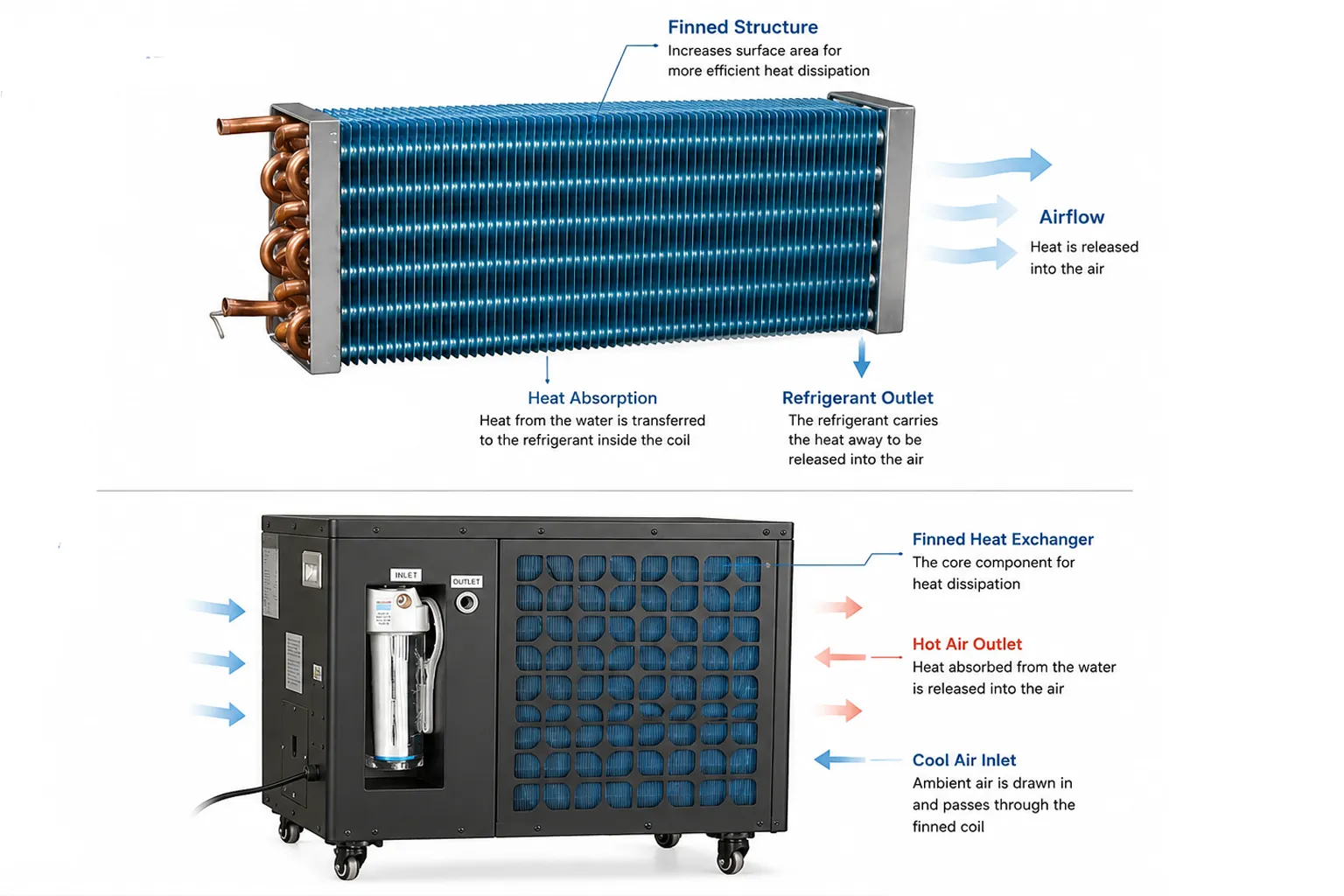
The condenser fin heat exchanger serves as the core heat dissipation and heat exchange component inside a cold plunge chiller, a vital part that governs the cooling efficiency and power consumption of refrigeration equipment. Unlike regular pipes, its surface is covered with scale-shaped condenser fins tightly attached to refrigerant tubes. This structural design dramatically expands the contact area between the tubes and ambient air.
Once the equipment is activated, the internal refrigerant absorbs heat from the cold plunge pool water and circulates through the pipes toward the condenser fins. Acting as an efficient heat radiator, the condenser fins rapidly dissipate the accumulated heat into the air to recool the water, completing a full cooling cycle.
Within the entire cold plunge chiller, the condenser fins undertake the most critical heat rejection work. When the condenser fins deliver outstanding heat dissipation capacity, the cold plunge chiller can quickly reduce water temperature and sustain steady low-temperature operation continuously. Without the auxiliary heat exchange support of condenser fins, the overall efficiency of the cold plunge chiller will drop drastically. The unit will cool water far more slowly, run for extended periods, and waste substantial electricity. More importantly, fluctuating unstable water temperatures will severely degrade the ice bath experience.
2.Durability Difference Between the Two Types of Condenser Fin Materials for Long-Term Use
The biggest gap between copper condenser fins and aluminum condenser fins lies in durability and resistance to harsh conditions, which directly determine the service life of cold plunge chillers and the frequency of later maintenance.
Copper condenser fins feature natural rust and corrosion resistance. Whether in humid environments, areas with frequent disinfectant exposure, or locations with drastic temperature swings, they rarely rust, scale up or deform under long-term non-stop operation, maintaining consistent heat dissipation performance all the time.
Aluminum condenser fins are thin with weak anti-corrosion properties. They are prone to rust and scale buildup after frequent washing, prolonged dampness, or exposure to coastal salt spray. Rust and limescale will block the gaps between condenser fins, gradually deteriorating heat dissipation. Eventually, the unit will bear excessive load, leading to frequent malfunctions and shutdowns. Besides, aluminum condenser fins are relatively soft. They deform easily during routine cleaning or accidental knocks, which will disrupt the normal refrigeration performance of the chiller over time.
Select Condenser Fins for Cold Plunge Chillers Based on Application Environment
Copper condenser fins deliver far superior overall performance compared with aluminum condenser fins and fit most complex and long-term operating scenarios. Copper condenser fins come at a slightly higher price than aluminum ones, yet choosing copper condenser fins ensures long-term stable equipment operation and cuts down subsequent maintenance costs.
Aluminum condenser fins are only suitable for small indoor venues with mild environments and short intermittent usage. There are two mainstream coated aluminum foil variants: hydrophilic aluminum foil and hydrophobic aluminum foil, each with unique practical strengths. The hydrophilic aluminum foil forms a thin water film to drain condensed water rapidly, preventing standing water buildup and inhibiting mold and limescale growth, making it ideal for high-humidity spaces like spas and cold plunge rooms. The hydrophobic aluminum foil repels moisture to let water bead and slide off directly, greatly reducing dust adhesion and simplifying daily cleaning routines, which works perfectly for well-ventilated gyms with moderate humidity. Such chillers can only barely slow down rusting and aging of aluminum foil when venues have low customer flow and shut down regularly for daily maintenance; prolonged continuous operation will easily trigger performance attenuation and unexpected malfunctions.
In contrast, copper condenser fins feature inherent anti-corrosion properties. They can withstand all-day indoor commercial operation as well as humid coastal sites with heavy salt spray. They will not oxidize or form scale under long-term exposure to wind and rain or non-stop running, maintaining steady heat dissipation consistently. Opting for copper condenser fins brings greater convenience and significant long-term cost savings for wellness, resort and cold bath projects.
Key Factors to Compare When Selecting Condenser Fins for Cold Plunge Chillers
Whether you are bulk wholesale distributors, independent website brand operators, or wellness project contractors, you will take actual operating conditions into comprehensive consideration before purchasing cold plunge chillers with copper or aluminum heat exchangers, instead of placing orders based on a single indicator alone. The top priority is the installation environment of the unit: local humidity levels, coastal salt spray exposure, and indoor or outdoor placement directly determine the corrosion resistance of condenser fins and the suitable material to choose. The second factor is the operating load of the chiller and peak cooling demand, which helps evaluate whether the heat exchanger has sufficient heat dissipation capacity. Aluminum fin heat exchangers are more cost-effective for household use with low frequency and limited budgets. For commercial venues running 24 hours a day that require non-stop operation and high-standard maintenance, copper fin heat exchangers offer superior durability and bring less hassle and lower long-term costs. As a fully self-developed and self-manufactured manufacturer of ice bath cooling equipment, Coldchiller mainly supplies premium cold plunge chillers equipped with copper condenser fins, while customized aluminum fin models are available upon request. All units have obtained multiple international certifications, and strict quality control systems guarantee consistent quality for every piece of equipment.
1.Why Global B2B Buyers Trust Coldchiller Chillers Under Alphasauna
As a professional cold plunge tub chiller supplier, Alphasauna is the world’s first manufacturer to independently develop and produce sauna and ice bath refrigeration equipment across the entire supply chain. Its Coldchiller refrigeration units and custom ice bath chiller solutions are trusted by distributors, cross-border merchants, and wellness engineering companies worldwide. Professional purchasing clients don’t choose models based on a single parameter; they consider the site environment and the equipment’s operating intensity.
Site humidity, whether it’s near the sea with salt spray, and whether it’s indoor or outdoor installation all directly affect the corrosion resistance lifespan of the fins. We only adopt high-quality copper fin heat exchangers for all units. The entire unit features a high-temperature resistant painted shell, achieving an IPX4 rain and water resistance rating, suitable for mild indoor retail spaces and rainy, high-salt-spray outdoor environments.
For low-frequency home use and budget-constrained projects, aluminum fins can be a more affordable alternative. However, for high-load commercial scenarios such as resorts operating 24/7, copper fins, with their superior corrosion resistance and long-term energy-saving advantages, are a more reliable long-term operating choice.
Coldchiller has comprehensively upgraded its R&D and production management system for ice bath machines, possessing a complete closed-loop development process covering customized design, prototype debugging, performance testing, international certification, and mass production, coupled with standardized quality inspections at the incoming material, process, and outgoing stages. All machines undergo 100% full-item testing, and sampling is also conducted for outdoor aging, transportation vibration, and temperature rise durability reliability testing, with official test reports available.
Each unit is equipped with an independent production tracking card, ensuring full traceability throughout the production process. Products hold multiple international certifications including CE, PSE, SAA, ETL, FCC, and CB, and support full-specification OEM/ODM custom ice bath chiller customization.
The equipment features self-developed APP remote control and intelligent fault self-diagnosis. Leveraging the self-sufficiency advantages of the entire sauna and ice bath refrigeration machine industry chain, we stand as a trustworthy cold plunge tub chiller supplier with equipment that boasts high compatibility and stable supply. The flagship copper-finned model has fewer malfunctions and lower maintenance costs, providing long-term stable returns for various commercial projects.
FAQs
Question1: Are copper fins always better at cooling than aluminum fins?
Answer: Yes, the advantages of copper fins go beyond just instantaneous cooling speed; they also offer better heat dissipation stability under high loads and long-term operation.
Question2:What is the most fundamental difference between copper fins and aluminum fins?
Answer:The main gaps are corrosion resistance, lifespan and maintenance costs, not basic cooling power. Copper fins are stable, durable and anti-corrosive. Aluminum fins are lower-priced but degrade fast under heavy use or harsh conditions.
Question3: What scenarios are suitable for using aluminum finned heat exchangers?
Answer: Suitable for indoor, mild environments and infrequent, intermittent use. For example, a home ice bath.
Question4:Are copper condenser fins more cost-effective for long-term use?
Answer: Yes. Copper condenser fins cost more upfront but resist corrosion and need little maintenance, saving more over long commercial use.
Get A Quote

Contact Me
Related Post You May Also Like
Ice Plunge Chiller Spacing: How Far Apart Should 2 Units Be?
[pac_divi_table_of_contents exclude_headings_by_class="include" included_headings="off|on|on|off|off|off" active_link_highlight="on" level_markers_3="icons" title_container_padding="10px|15px|10px|15px|true|false" title_container_bg_color="#333333"...

How to Manage Condensation Water in an Indoor Cold Plunge?
[pac_divi_table_of_contents exclude_headings_by_class="include" included_headings="off|on|on|off|off|off" active_link_highlight="on" level_markers_3="icons" title_container_padding="10px|15px|10px|15px|true|false" title_container_bg_color="#333333"...
Water Flow Insufficient for Water Chillers for Ice Bath: Causes and Solutions
[pac_divi_table_of_contents exclude_headings_by_class="include" included_headings="off|on|on|off|off|off" active_link_highlight="on" level_markers_3="icons" title_container_padding="10px|15px|10px|15px|true|false" title_container_bg_color="#333333"...

Best Cold Plunge Tub for Tall People: Buying Guide
[pac_divi_table_of_contents exclude_headings_by_class="include" included_headings="off|on|on|off|off|off" active_link_highlight="on" level_markers_3="icons" title_container_padding="10px|15px|10px|15px|true|false" title_container_bg_color="#333333"...
0 Comments