
Cold Plunge Tub Buying Guide: Commercial vs Home Use

If you plan to use a cold plunge tub long-term and want hassle-free ongoing maintenance, alongside excellent service life and controlled long-run costs, stainless steel is usually your top material pick. As covered in this cold plunge tub buying guide, common materials for cold plunge tubs on the market include inflatable PVC, solid wood, acrylic and stainless steel, each with unique strengths suited for different usage scenarios.
Inflatable PVC works well for users on a tight budget or those needing portable, temporary cold immersion experiences. Solid wood appeals to buyers seeking authentic natural texture, while acrylic balances attractive appearance and comfort. By contrast, stainless steel outperforms alternatives in corrosion resistance, ease of cleaning and long-term structural stability, making it ideal for coastal locations or frequent, prolonged use.
Cold plunging has become a popular wellness routine for many people to ease exercise soreness, boost physical recovery and support daily health management. However, when shopping for a cold plunge tub, most buyers tend to prioritize upfront price or aesthetics while overlooking long-term maintenance requirements, usage frequency and practical differences between materials.
Drawing on different usage scenarios, material characteristics and long-term maintenance expenses, this cold plunge tub buying guide will walk you through everything you need to know about cold plunge tubs and help you find the perfect model.
How to Avoid Mindless Cold Plunge Tub Purchases?
Before shopping for a cold plunge tub, don’t rush to compare materials and styles. First, figure out your usage scenarios and usage frequency. A lot of buyers end up choosing the wrong equipment not due to inferior product quality, but a mismatch with their real-world needs. Ideal tub styles, sizes and setups differ greatly across different use cases. Choosing the right model delivers smooth, low-maintenance performance and avoids waste.

1. Home Use Scenario
For home use targeting daily fitness recovery and residential wellness, the cold plunge tub will mainly accommodate one person, used roughly two to three times weekly. It is commonly installed in bathrooms, balconies or backyard spaces, which usually have limited room. Under such circumstances, avoid chasing oversized sizing and commercial high-end configurations unnecessarily. Instead, go for compact, stable tubs that simplify cleaning. Your key priorities should be durability, easy upkeep and space-saving design.
2. Commercial Operation Scenarios
In commercial settings such as gyms, wellness studios, and health resorts, the equipment is used extremely frequently, with multiple people taking turns soaking in it throughout the day. Therefore, the durability, hygiene, and stability of the bathtubs are paramount. Commercial equipment is most susceptible to frequent malfunctions, bacterial growth, and repeated repairs, which not only disrupt normal operations but also continuously increase operating costs. Therefore, high-strength, corrosion-resistant, and durable rigid models must be prioritized.
3. People Who Carry With Them While Traveling
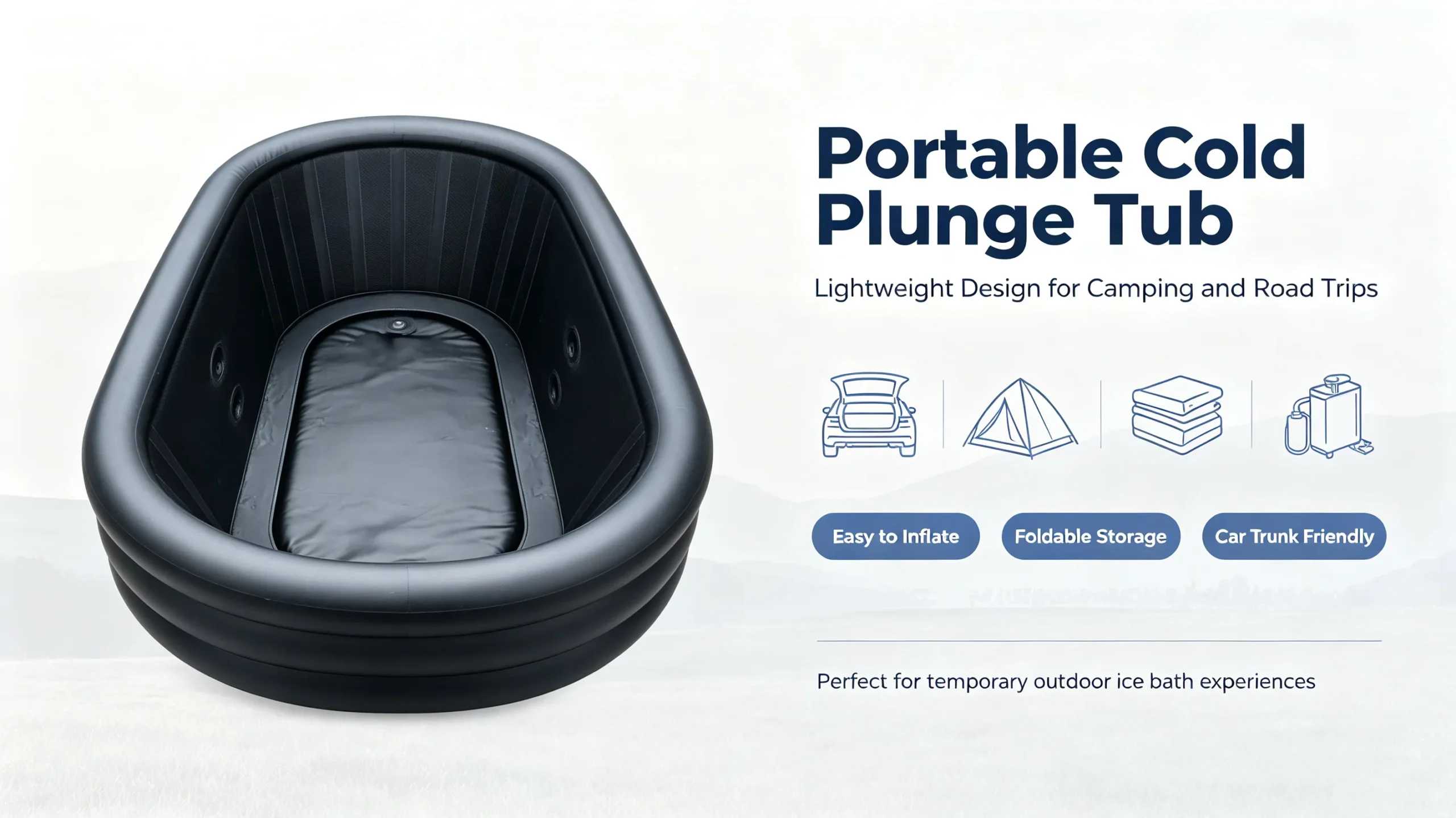
If you frequently go camping, take road trips, or want to move your cold plunge tub between locations, portability matters more than material and appearance. In this case, an inflatable cold plunge tub is the better fit. It is lightweight. When not in use, you can deflate and fold it for storage. It easily fits inside a car trunk without taking up much space, and quick setup is straightforward.
That said, the biggest strength of inflatable models is transportability, not long-term service. Repeated folding, moving, and constant exposure to cold water gradually age the PVC material. They generally have a shorter lifespan than hard-shell tubs. If you only plan occasional outdoor use or want to test cold plunging, this option works well. However, if you intend to stick with cold immersion long-term, we recommend a more durable hard-shell cold plunge tub for lower-maintenance upkeep down the line.
Which Cold Plunge Tub Material Is Best for Long-Term Use?
When exploring materials used in cold plunge tubs, you will encounter four popular options on the market: inflatable PVC, solid wood, acrylic and stainless steel. Each comes with distinct characteristics and caters to different needs. Some buyers want to try cold immersion with a low upfront budget, some prioritize visual aesthetics, while others seek a unit built for long-term use with minimal maintenance. Learning about the properties of each material helps you make a better choice than simply comparing prices, especially when evaluating options like a cold plunge tub stainless steel.
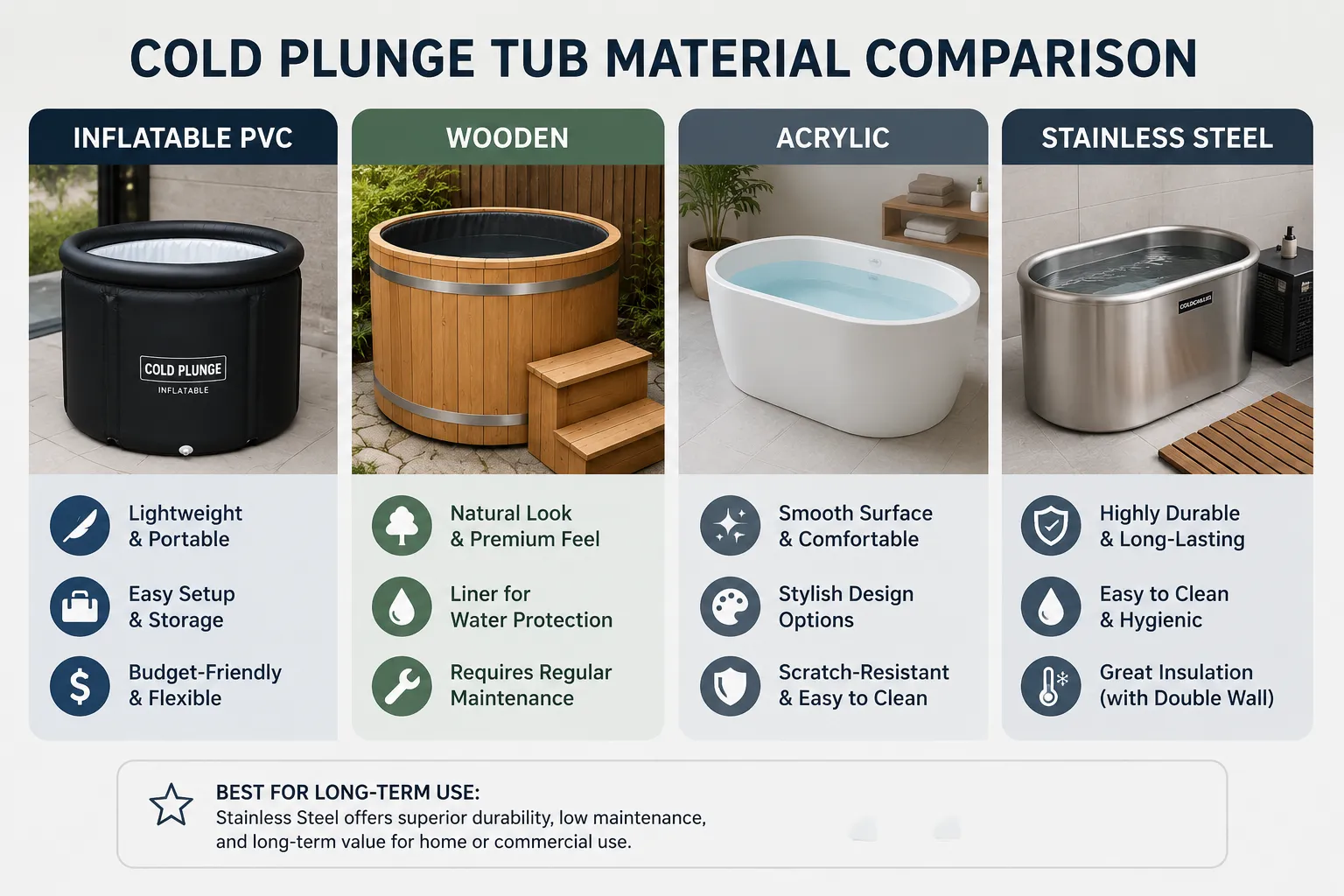
1. Inflatable PVC: Portable & Flexible
If you’re trying cold plunging for the first time, or want a unit that can be moved freely without occupying permanent space, an inflatable PVC cold plunge tub is a convenient option. It comes with a relatively budget-friendly price and lightweight build. You can deflate, fold and store it when not in use, making it ideal for renters, balconies, camping or casual trial experiences.
Compared with stationary hard-shell tubs, inflatable models shine with easy setup and excellent portability. No complicated installation is required, and you can shift its location anytime. However, since PVC is engineered for flexibility and mobility, it falls behind hard materials such as stainless steel in wear resistance and anti-aging performance under frequent long-term use. Additionally, many inflatable tubs have limited compatibility with circulating cooling systems. Long-term usage may require frequent water changes or extra ice supplementation.
Inflatable PVC works great if your priorities are low-cost cold plunge trials, occasional use or transportability. If you plan permanent long-term placement and aim to cut ongoing maintenance and replacement expenses, consider a more durable hard-shell cold plunge tub instead.
2. Solid Wood Tubs: Premium Aesthetic & Texture
Many people choose solid wood cold plunge tubs not merely for cold immersion, but for the visual appeal and atmospheric feel brought by natural timber. When placed in courtyards, saunas or spaces with rustic decor, solid wood blends seamlessly with the surroundings. Unlike metal surfaces, wooden surfaces do not feel sharply cold against the body upon contact.
To boost waterproof performance, numerous modern solid wood cold plunge tubs are fitted with an internal PVC pool liner. This barrier separates water from the timber, minimizing damage caused by prolonged direct water exposure, lowering leakage risks and easing maintenance. For residential daily use, this design greatly improves the practicality of wooden cold plunge tubs.
Even so, solid wood remains susceptible to fluctuating ambient humidity. When kept in persistently damp conditions, regular upkeep is required: inspecting timber condition periodically, reapplying hard wax oil or waterproof treatments, and keeping the interior clean. If you love the natural aesthetic of timber and are willing to set aside time for ongoing care, a solid wood cold plunge tub remains a uniquely characterful option.
3. Acrylic Tubs: Balancing Appearance and Comfort
Acrylic is a widely used material for cold plunge tubs. It boasts great malleability to support diverse shapes, featuring a smooth surface with mild tactile feel, and its price range suits most household budgets. Minor scratches can generally be repaired via polishing, making it a popular choice for residential use.
Over time, the acrylic surface may gradually lose its gloss. Exposure to UV rays, disinfectants and daily abrasion can also trigger yellowing and material aging. These changes tend to happen slowly under ordinary household use. Even so, sustained high-frequency usage will inevitably take a toll on its overall appearance.
4. Stainless Steel Cold Plunge Tubs: Ideal for Long-Term Use
Many people’s first impression of stainless steel cold plunge tubs is their industrial aesthetic, and the surface feels noticeably colder to the touch compared with other materials. However, buyers planning long-term use should prioritize durability, ease of cleaning and long-term maintenance costs.
304 stainless steel is widely adopted for cold plunge tubs. Most feature seamless welded construction that resists cracking and deformation. Unlike wood, it has no crevices, simplifying daily cleaning. Under regular use, simply rinse with water and wipe down to keep the tub clean, minimizing buildup of grime and mold. For most households, a high-quality 304 stainless steel single cold plunge tub delivers reliable long-term performance.
If you operate under demanding conditions, such as coastal regions, highly humid spaces, or commercial settings with constant exposure to disinfectants and bath salts, upgrading to 316 stainless steel is recommended. Compared to 304 stainless steel, 316 offers superior resistance to chloride corrosion, making it suitable for applications requiring enhanced corrosion protection.
Many modern stainless steel models are constructed as insulated cold plunge tub. This double-wall insulation reduces exterior condensation and limits cold energy loss, enabling stable operation when paired with a chiller. For long-term home wellness, fitness recovery and commercial operations, stainless steel holds clear advantages in service life, low upkeep and total cost of ownership.
What Details to Check When Selecting a Stainless Steel Cold Plunge Tub?
Once you decide on stainless steel construction, avoid placing an order hastily. Stainless steel cold plunge tubs available on the market vary widely in quality. Many low-cost inferior products use industrial-grade steel disguised as food-grade steel, which tends to develop rust, leaks and deformation after just one or two years of use. If you want to pick a reliable, long-lasting unit, focusing on these key core details will help you steer clear of common pitfalls.
1. Distinguish Steel Grades & Avoid Low-Grade 201 Stainless Steel
Most ultra-low-priced stainless steel bathtubs on the market use 201 industrial stainless steel. This type of steel has a high manganese content and extremely poor corrosion resistance, completely failing to meet food contact standards. After prolonged contact with water, bath salts, and disinfectants, it will be covered in rust spots within just a few months. The weld seams are most prone to corrosion, cracking, and leaks, resulting in a very short lifespan.
High-quality models use 304 food-grade stainless steel, conforming to authoritative standards such as ASTM A240 and EN 1.4301. It is corrosion-resistant, highly stable, and widely used in food equipment and medical devices. It is suitable for home cold water baths, routine disinfection, and humid environments, offering the best cost-performance ratio and making it the preferred material for home use.
For demanding scenarios such as humid coastal areas, frequent use of bath salts, or high-frequency commercial disinfection, upgrading to 316 stainless steel is recommended. It has stronger resistance to chloride ion corrosion and better durability. For ordinary home use, there is no need to blindly upgrade to 316.
When purchasing, always request a material testing report from the seller. After receiving the goods, you can also verify the material using stainless steel test paper to prevent sellers from using inferior materials.
2. Check Sheet Thickness to Prevent Deformation and Leaks
Inferior products, in order to cut costs, often use sheet metal thinner than 1.0mm. The cylinder body, subjected to prolonged water pressure, is prone to denting and deformation, and the welds will crack and leak under long-term stress, posing serious quality risks.
For home use, it is recommended to choose an inner tank with a thickness of 1.2mm or more, as its stability and pressure resistance are sufficient for daily use. For commercial high-frequency applications, 1.5mm thick sheet metal is preferred, offering high strength, load-bearing capacity, and resistance to wear and tear, making it less prone to failure under long-term, high-frequency use.
3. Choose Tubs With Double-Wall Insulation
If your budget allows, prioritize a double-layer structure and avoid single-layer stainless steel bare tanks. Single-layer tanks are prone to condensation on the outer wall, especially noticeable in summer. This not only leads to slippery floors and scale buildup but also causes significant coolant loss. When used with a chiller, the unit needs to be frequently started and stopped to maintain temperature, resulting in higher energy consumption and electricity bills.
Double-layer structures, with built-in insulation in the sandwich layer, completely prevent condensation on the outer wall, keeping the floor dry. They also effectively retain coolant, reducing loss and lowering the chiller’s operating load, resulting in more energy savings and a more stable experience in the long run.
4. Prioritize Practical Accessories to Enhance Long-Term Usage Experience
Many people choose bathtubs focusing only on the material and thickness of the boards, easily overlooking the accompanying accessories. However, these details directly affect the daily user experience. A large-diameter drain at the bottom ensures faster drainage and easier cleaning of the bottom. A standard circulation interface allows for future installation of a chiller or filtration system without additional modifications. An overflow outlet prevents overfilling. A non-slip bottom design reduces the risk of slipping when entering or exiting the bathtub. These easily overlooked details are key to the difference in user experience.
Stainless Steel Cold Plunge Tub Maintenance Tips
The core advantage of stainless steel cold plunge tubs lies in simple maintenance with minimal upkeep required. Avoid common mistakes and follow proper care practices, and your tub can stay in pristine condition for decades, reliably serving you for over ten years.
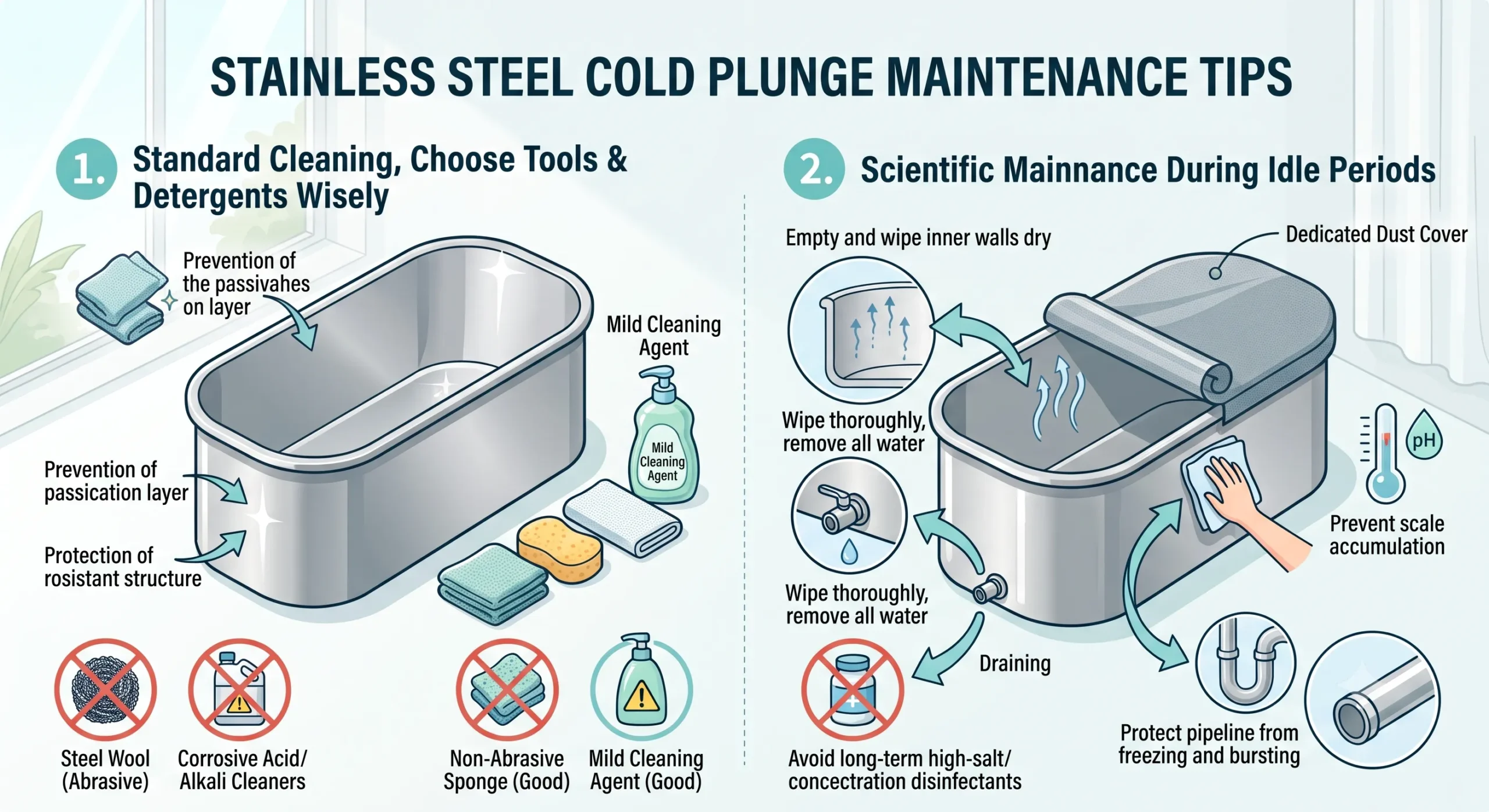
1. Standardized Cleaning: Choose Proper Tools & Cleaners
Routine cleaning only requires wiping with a soft cloth or sponge and neutral warm water. The use of steel wool, strong acids, or strong alkalis is strictly prohibited. Steel wool will scratch the passivation protective layer on the cylinder surface, damage the stainless steel’s anti-corrosion structure, and residual iron filings can induce surface rust. Prolonged contact with welds using highly corrosive cleaners will accelerate steel aging and corrosion, shortening the equipment’s lifespan.
2. Scientific Maintenance During Idle Periods
When the equipment is not in use for an extended period, thoroughly drain all water from the tank, wipe the inner walls dry, and cover it with a dedicated insulated dustproof cover to prevent dust accumulation, moisture, and oxidation. Frequent and excessive disinfection is unnecessary; simply maintain a balanced pH level in the water. Avoid prolonged immersion of the tank in high-salt, high-concentration disinfectants to protect the steel structure to the greatest extent possible.
There is no need to worry excessively about rust; the 304 stainless steel protective layer is stable and durable. Most of the surface rust spots you see are caused by airborne iron particles adhering to the surface; these can be easily removed by wiping and are not signs of corrosion or rust on the tank itself. If the equipment is to be left outdoors for an extended period during winter, be sure to thoroughly drain all water from the water system to prevent the water from freezing and damaging the pipes, thus protecting the integrity of the equipment’s structure.
What Experience Can You Get From Coldchiller Manufacturer’s Cold Plunge Tubs?
The Coldchiller cold water bathtub is made of pure 304/316 stainless steel. The tub body is 1.5mm thick, and the bottom is upgraded to a 2.5mm thicker plate, exceeding the material standards of mainstream products on the market. It features a patented “Diamond Series” structure with reinforced steel bars at the bottom for added strength, making it resistant to pressure and impact, and durable enough to withstand deformation and collapse, unlike the easily corroded wooden support solutions on the market. The connection between the tub body and bottom uses a double-layer welding process with pollution-free white welding rods and thorough cleaning of the weld seams, ensuring a leak-proof seal. The tub body undergoes a custom-designed, neatly brushed finish, resulting in a uniform, high-end texture that is wear-resistant, stain-resistant, and easy to clean. The tub body and bottom are filled with high-quality insulation material, and an insulation cover creates a double insulation system, effectively reducing cold loss and saving energy. The product also incorporates a user-friendly design, with clearly marked inlet and outlet ports on the tub body. The inlet is equipped with a removable filter. The bottom can be equipped with casters or fixed support feet. Multiple standard and patented series are available, and customization of size, style, and surface finish is supported. The brand supports non-standard sizes and shapes for customization, and relies on standardized production and CNC cutting to achieve stable quality control. Each product comes with an installation guide video and instruction manual, making assembly convenient and worry-free.
1.Cold Plunge Chiller Series
The supporting cold plunge chiller comes fully equipped with comprehensive functions. It features an LCD touch display and supports remote control via self-developed APP. Optional ozone and UV disinfection keep the water clean. An automatic water filling system simplifies operation. Custom branding is available for both appearance and interface. The unit holds international safety certifications including ETL, CE, SAA and PSE, and comes with MSDS material safety data sheets. It delivers wide temperature adjustment ranging from 3°C to 40°C, supporting cold plunge therapy and warm wellness care all in one machine.
Inside the unit, high-pressure and high-temperature resistant stainless steel pipelines are wrapped with insulation layers, enabling continuous long-run operation for commercial use. The chiller adopts premium copper finned radiators and reaches an IPX4 waterproof rating. Its high-temperature resistant painted housing fits both indoor and outdoor scenarios. Equipped with bottom casters for easy relocation, the unit also integrates a built-in intelligent self-diagnosis system that pushes real-time fault alerts once abnormalities occur. Internal wiring is neatly organized.
FAQs
Question1:Is 304 stainless steel sufficient for a home cold plunge tub, or should I upgrade directly to 316?
Answer:For ordinary indoor household use, 304 stainless steel is perfectly adequate and offers better value for money. If placed in a coastal environment with high salt spray, it is recommended to upgrade to 316 stainless steel, which has stronger resistance to chloride ion corrosion.
Is there a significant difference between a double-layer insulated stainless steel cold water bathtub and a single-layer stainless steel one?
Answer:A single-layer stainless steel exterior is prone to condensation, offering poor insulation and resulting in higher energy consumption. A double-layer structure with an internal insulation layer ensures greater energy savings during long-term, constant-temperature operation.
Question3: Does the appearance of surface rust on a stainless steel cold water bathtub indicate a product quality defect?
Answer: Not necessarily. 304 stainless steel is not prone to rust. The surface rust you usually see is mostly iron dust from the air adhering to the surface, which can be removed by wiping with a neutral detergent. True corrosion rust spots generally appear at the weld seams and spread continuously, making them impossible to remove. Avoiding scratching the tank with steel wool and avoiding prolonged soaking in high-concentration, highly corrosive agents will effectively prevent this.
Get A Quote

Contact Me
Related Post You May Also Like

Ice Plunge Chiller Spacing: How Far Apart Should 2 Units Be?
[pac_divi_table_of_contents exclude_headings_by_class="include" included_headings="off|on|on|off|off|off" active_link_highlight="on" level_markers_3="icons" title_container_padding="10px|15px|10px|15px|true|false" title_container_bg_color="#333333"...

How to Manage Condensation Water in an Indoor Cold Plunge?
[pac_divi_table_of_contents exclude_headings_by_class="include" included_headings="off|on|on|off|off|off" active_link_highlight="on" level_markers_3="icons" title_container_padding="10px|15px|10px|15px|true|false" title_container_bg_color="#333333"...

Water Flow Insufficient for Water Chillers for Ice Bath: Causes and Solutions
[pac_divi_table_of_contents exclude_headings_by_class="include" included_headings="off|on|on|off|off|off" active_link_highlight="on" level_markers_3="icons" title_container_padding="10px|15px|10px|15px|true|false" title_container_bg_color="#333333"...

Best Cold Plunge Tub for Tall People: Buying Guide
[pac_divi_table_of_contents exclude_headings_by_class="include" included_headings="off|on|on|off|off|off" active_link_highlight="on" level_markers_3="icons" title_container_padding="10px|15px|10px|15px|true|false" title_container_bg_color="#333333"...
0 Comments