
Wooden Cold Plunge Tub: Explore Our Wood Options and Thickness Details

With its beautiful wood grain and natural feel, the wooden cold plunge tub is a favorite among many customers. Today, coldchiller will guide you through everything you need to know about our wooden cold plunge tubs.
In this blog, you’ll learn about the wood options available, wood thickness, maintenance tips, and more. Read on to discover all the details.

How Many Wood Choices Do We Offer for Ice Bath Tubs?
Different wood types used in ice tubs vary in durability, comfort, and visual appeal. As an experienced ice tub manufacturer specializing in cold therapy, we offer seven types of wood for our ice bath tubs: Red Cedar, Hemlock, Thermal Hemlock, Pine, Thermal Pine, Hinoki, and Japanese Cedar. Each wood has its own unique characteristics.
Red Cedar
Red Cedar is one of the top choices for ice bath tubs, offering several standout features:
Natural antiseptic properties: Red Cedar has excellent antiseptic properties and is naturally resistant to termites, rot, and decay, making it an ideal choice for outdoor cold plunge tubs.
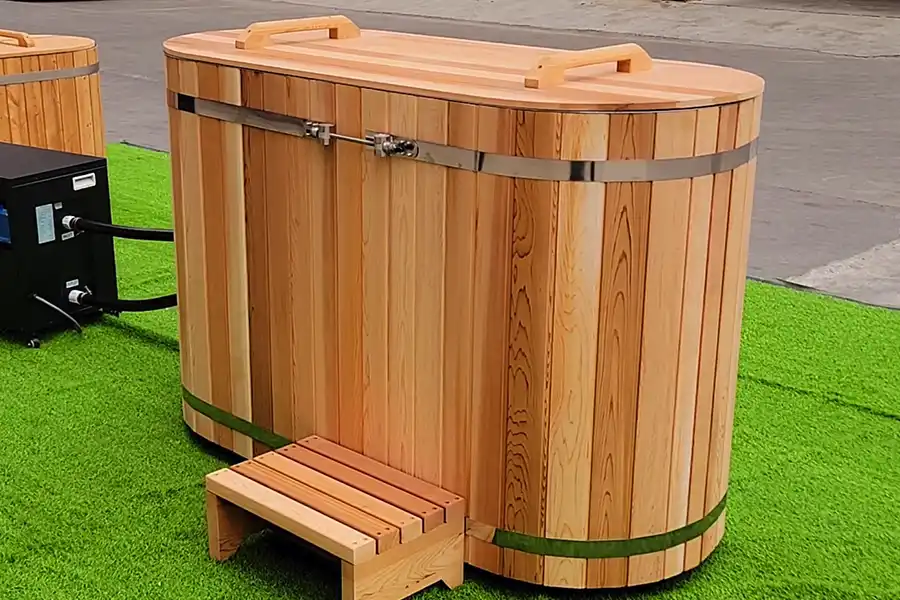
Extreme stability: Red Cedar is highly stable and not prone to deformation and cracking. It maintains its performance even in extremely dry and wet conditions.
Low density: Its lightweight nature makes transportation and installation easier compared to other woods of similar volume.
Pleasant fragrance: Red Cedar features a beautiful grain, uniform texture, and a light, natural aroma that enhances the ice bath experience.
Hemlock
Hemlock has a light, yellowish color and typically features few or no knots, giving it a clean and elegant appearance. For outdoor use, we recommend applying wood oil to the surface of Hemlock. This helps protect the material from weather damage and extends its overall lifespan.
Thermal Hemlock
Thermal hemlock is a type of wood obtained through the heat treatment of hemlock. This process results in a darker color and significantly enhances the wood’s stability and resistance to corrosion. Compared to untreated wood, thermally treated hemlock is more suitable for outdoor ice baths.
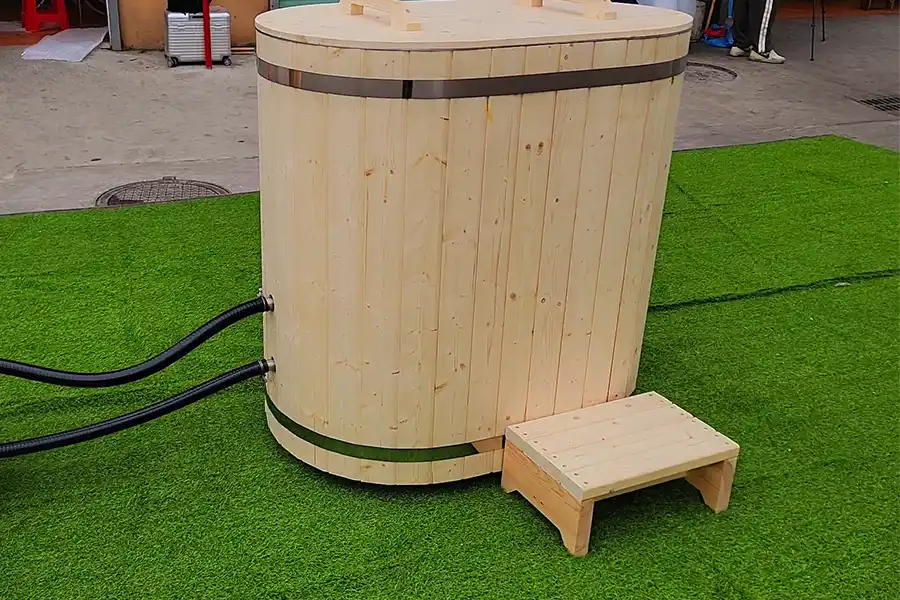
Pine
The pine wood we use is strong and features natural knots. Due to its low cost, pine is a popular choice among customers, especially those with limited budgets. However, it is important to note that pine is prone to cracking after prolonged outdoor use. To extend its lifespan, applying wood wax oil is recommended.
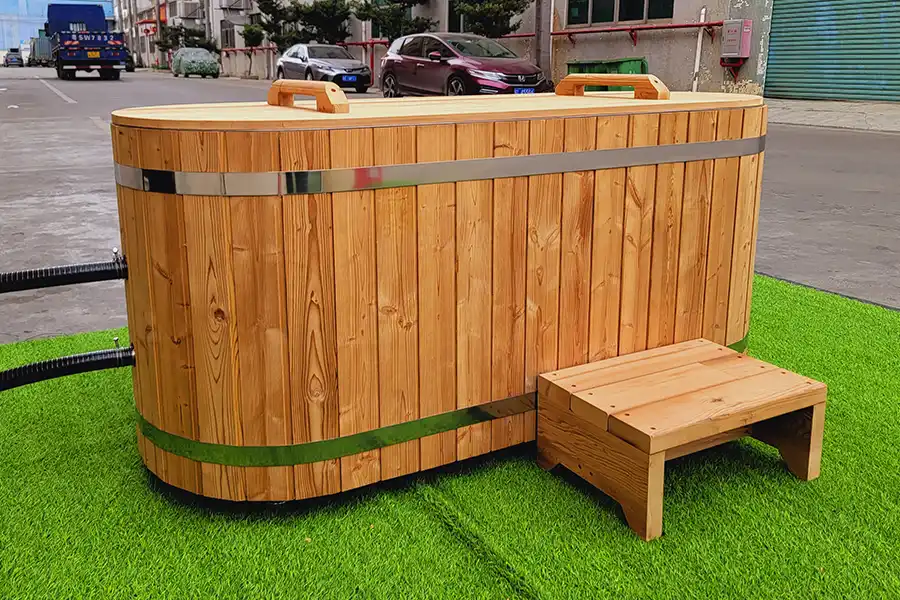
Thermal Pine
Thermal pine is a commonly used material for cold water plunge tubs. It is made by heat-treating pine wood to improve its durability and resistance to decay. The heat treatment enhances the wood’s stability and significantly reduces the risk of expansion in the humid environment of an ice bath.
Hinoki
Hinoki wood has a fine, straight grain and is free of knots. It is highly stable, resistant to deformation, and naturally resistant to rot. Often used in high-end furniture, construction, and crafts, hinoki contains polycrystalline compounds and hinokitiol, which provide excellent anti-corrosion and insect-resistant properties.

Japanese Cedar
Japanese cedar, also known as “willow fir,” has a color range from light to dark and bears a visual resemblance to Canadian red cedar. It has a straight grain and uniform texture, with natural resistance to insects and rot. Its durability is comparable to that of red cedar, making it an excellent choice for outdoor use.
What Is the Wood Thickness of a Wooden Cold Plunge Tub?
COLDCHILLER offers three wood thickness options for wooden cold plunge tubs: 3.85 cm, 2 cm, and 1.6 cm. These can be customized based on tub size and user needs.
Wood thickness is a major concern for many customers when purchasing a cold plunge tub. It directly affects both the insulation performance and durability of the tub.
Thicker wood provides better thermal insulation by reducing the rate of heat exchange between the cold water and surrounding air. In addition, the thickness of the cold plunge barrel will also affect the durability of the tub. Thinner wood is more prone to cracking and warping, especially when exposed to humid environments over time.
Typically, the wooden staves used on the outer shell of an ice tub range from 2 cm to 3 cm in thickness. This range provides optimal thermal insulation and structural stability, helping prevent deformation and cracks.
To further improve insulation, we apply a layer of professional insulation foam between the wooden shell and the inner liner of the tub. This significantly boosts the tub’s ability to retain cold temperatures.
This means users can still enjoy colder water the next day after taking an ice bath, greatly reducing the time and energy required for re-cooling.
Advantages and Disadvantages of Using Solid Wood and Plastic Wood for Cold Plunge Tubs
Coldchiller wooden cold plunge tubs are mainly made of solid wood, while some manufacturers use plastic wood as an alternative material. Below, we analyze the advantages and disadvantages of both materials.
Solid Wood
Solid wood offers a beautiful, natural texture and excellent thermal insulation, which helps slow down the heat exchange of ice water. As a natural and biodegradable material, it aligns well with environmental protection principles.
However, solid wood is generally more expensive than plastic wood and requires regular maintenance, which can be time-consuming and costly.
Plastic Wood
Plastic wood is highly resistant to water and moisture, making it less prone to rot. It is also lightweight, making transportation and installation easier.
While plastic wood mimics the appearance of real wood, it lacks the natural feel of solid wood. Additionally, some components of plastic wood are non-degradable and can be harmful to the environment.
How to Solve the Problem if the Cold Plunge Tub Wood Cracks?
The solutions to cracked wood in cold plunge tub include applying wood wax oil, using wood glue to repair, and replacing the wood board. The cracking of cold plunge tub wood occurs because the wood is exposed to the sun for a long time, which causes water loss and cracking.
The cracking of cold plunge tub requires different treatment methods.
If only slight cracking of fine lines on the surface occurs, it is recommended to apply wood wax oil to prevent excessive cracking, and place the cold plunge tub in a cool and dark place.
When visible but not penetrating cracks appear, wood glue mixed with sawdust can be used to fill the cracks and polish them flat.
If serious cracks occur, it is recommended to contact the manufacturer for repair advice or replace key parts.
You can prevent wood cracking by applying wood wax oil regularly and placing the cold plunge tub in a place away from direct sunlight.
How to Maintain a Wooden Cold Plunge Tub?
Proper maintenance of a wooden cold plunge tub not only preserves its natural beauty and texture but also extends its overall lifespan. Key maintenance practices include cleaning, protection, and regular inspections.
Cleaning
After each use, wipe off any moisture from the wood with a dry cloth or towel—pay special attention to the bottom and edges of the tub for ice bath. For cleaning, use a natural solution such as a mix of white vinegar and water (1:3) to help eliminate bacteria and odors. Alternatively, mild soapy water can be used for light cleaning.
Avoid using strong acids, bleach, or harsh chemical cleaners, as they can damage the wood.
Apply Wood Wax Oil Regularly
To prevent cracking and drying, apply wood wax oil regularly to the wooden surface. Do not use airtight chemical sealants, as they may interfere with the wood’s natural breathability.
Avoid Prolonged Sun Exposure
If the tub is placed outdoors, it’s recommended to install a shade or canopy to protect it from direct sunlight. Alternatively, place the tub in a shaded outdoor area. When not in use for extended periods, store the tub in a dry, ventilated location away from direct sunlight.
Inspect the Wood Regularly
Periodically check the ice bath barrel for signs of cracks, expansion, or mildew.
Also inspect the joints between the wooden staves and ensure the steel bands are tight and secure.
Why Choose COLDCHILLER Wood Cold Plunge Tub?
Each piece of wood in our ice bath tub is selected, cut, polished and manufactured through multiple processes. We refuse to use low-quality, worm-hole, or cracked wood, just to bring high-quality products to our customers. In order to further improve the service life of the wooden cold plunge tub, we provide customers with several liner options: stainless steel, pvc, and pool membrane.
We provide OEM/ODM customization services to our customers. We can customize the size, shape, etc. of the ice bath tub and add your brand logo to your wooden cold plunge tub. Whether you plan to use it in a gym, spa, hotel, or invest in an ice bath tub business, we can meet your needs.
As a cold plunge tub supplier, we have a deep understanding of the trends in ice bathing. Recently, we proudly launched a black-painted wooden cold plunge tub, which has been widely welcomed by users.
Still looking for a trustworthy ice bath tub supplier? Choose COLDCHILLER, we will definitely not let you down. If you need a detailed quotation, please contact us.
Wechat, whatsapp: +86 18129640320
Email: info@coldchiller.com
FAQ About Cold Plunge Wood Tubs
Below are some frequently asked questions from our customers. We hope these answers help! If your question isn’t listed here, feel free to contact us anytime.
Can I Use a Wooden Cold Plunge Tub Outdoors?
Yes, you can. However, if the cold plunge bath tub is placed outdoors for an extended period, protective measures are recommended to extend the wood’s lifespan. For example, apply wood wax oil regularly and install a sunshade to protect the tub from prolonged sun exposure.
Will Water Splashes Affect the Lifespan of the Wood?
For high-quality woods such as red cedar or Japanese cedar, short-term water contact won’t significantly affect their durability. However, frequent or long-term splashing may require waterproofing treatment. Without it, the wood can expand when wet and shrink when dry, leading to repeated swelling and contraction that may damage the wood—especially in untreated pine.
How Often Should I Change the Water in the Ice Tub?
As a general guideline, water should be changed after 10–15 uses. The exact frequency depends on how often the tub is used and the quality of the water.
Get A Quote

Contact Me
Related Post You May Also Like

Cold Plunge Tub Buying Guide: Commercial vs Home Use
[pac_divi_table_of_contents exclude_headings_by_class="include" included_headings="off|on|on|off|off|off" active_link_highlight="on" level_markers_3="icons" title_container_padding="10px|15px|10px|15px|true|false" title_container_bg_color="#333333"...

Cold Plunge Barrel vs Tub: Key Differences?How to Choose?
[pac_divi_table_of_contents exclude_headings_by_class="include" included_headings="off|on|on|off|off|off" active_link_highlight="on" level_markers_3="icons" title_container_padding="10px|15px|10px|15px|true|false" title_container_bg_color="#333333"...

Cold Plunge Chiller Transport:Fumigation Guidelines
[pac_divi_table_of_contents exclude_headings_by_class="include" included_headings="off|on|on|off|off|off" active_link_highlight="on" level_markers_3="icons" title_container_padding="10px|15px|10px|15px|true|false" title_container_bg_color="#333333"...

The Sauna & Ice Bath Opportunity You Can’t Ignore
[pac_divi_table_of_contents exclude_headings_by_class="include" included_headings="off|on|on|off|off|off" active_link_highlight="on" level_markers_3="icons" title_container_padding="10px|15px|10px|15px|true|false" title_container_bg_color="#333333"...
0 Comments